Why Customers Buy From You: The Key to Boosting Sales in 2026
Seventy percent of shoppers bail before paying. That’s not a rounding error. It’s the sound of revenue slipping through cracks you can’t see. The biggest culprit is buying friction, extra steps, missing information, fuzzy pricing, slow replies. Fix the friction and you stop the leak. That’s the thread that explains why customers buy from you or quietly walk away. Baymard Institute’s multi‑year analysis of 50+ studies puts the average documented cart abandonment rate around 70%, a signal that most buying journeys still make people work too hard. The cost is real for small businesses with thin margins. What changes that trajectory is mastering the string of small “yes” decisions that add up to a sale, not just the final click at the end. [Source: Baymard] (https://baymard.com/lists/cart-abandonment-rate).
People say “yes” when they trust you, understand the value, feel it’s the right time, and sense low risk. They back out when the path is confusing, the price is murky, social proof is absent, answers are slow, or the tone feels robotic. If you’re getting traffic or inquiries but not conversions, this is the map: reduce friction at each small “yes,” and the final “yes” gets easy.
Related: SALES Techniques - How To Convince A Customer To Buy From You — Dan Lok
Understanding the Buying Process and Customer Buying Behavior
Think of a purchase not as one decision, but as a staircase of micro‑decisions. Each step is a tiny “yes”: Yes, this problem is worth solving. Yes, your page looks credible. Yes, the price makes sense. Yes, I can do this now. Yes, my risk feels low. This is the purchase decision process buyers run, often without naming it. Miss a step and people hesitate. Hesitation kills momentum. Momentum is what turns browsers into buyers. It is practical customer psychology for small business teams.
A simple analogy helps. A buying journey is like stepping stones across a river. Each stone must be stable, visible, and close enough to the next. If any stone wobbles or sits too far away, people stop or turn back. In sales terms, a wobbly stone is a friction point: an unclear headline, a pricing surprise, a form that asks for too much, a reply that lands tomorrow instead of now.
Here’s how the staircase plays out with a service business. A homeowner searches “emergency furnace repair.” They click your ad. First “yes”: your landing page loads fast and looks legitimate. Second “yes”: the headline names their problem and your service area. Third “yes”: price ranges and response windows are transparent. Fourth “yes”: reviews from nearby neighborhoods confirm competence. Fifth “yes”: a simple “call now” or “request a call in 10 minutes” option that actually works. If you break even one of those, the next step feels risky. The river feels wider. Anxiety wins.
This is also why competitor context matters. If your rivals make early “yes” steps effortless, your small frictions loom larger. Want to check whether you’re fighting the right battles? Start with who you’re really up against online, not who you think you’re up against on the street. A helpful primer: how to identify your real competitors. Once you see the staircase from a buyer’s eye view and in a competitive context, the thesis becomes concrete: every small “yes” you secure reduces price pressure and speeds decisions.
With the staircase in view, let’s get precise about what pulls people forward.
Five Key Drivers of Purchase Decisions
Five drivers consistently nudge buyers toward “yes”: trust, clarity, urgency, social proof, and ease. Each one has a matching barrier on the flip side. Nail the drivers and you shorten the path to purchase. If you are asking what factors influence buying decisions, start here.
Trust. Trust earns attention and accelerates decisions. It isn’t vague sentiment. It’s demonstrated with visible trust signals and safety cues (secure checkout badges, recognized payment options), professional credentials, and customer voices that feel human and specific. Think concrete, verifiable markers like Google Reviews, Better Business Bureau accreditation, clear privacy language, and wallets people recognize such as PayPal. Canadian survey data show security and privacy weigh heavily on online transactions, with many consumers abandoning when trust signals are weak. In TransUnion’s Canadian fraud research, a large share of shoppers cited fraud or security concerns as a top reason for abandoning online purchases. That’s not paranoia, it’s self‑protection. [Source: TransUnion] (https://www.globenewswire.com/news-release/2025/04/09/3058210/0/en/TransUnion-Study-Finds-More-than-Half-56-of-Canadians-Said-They-Were-Targeted-by-Fraud-in-Second-Half-of-2024.html).
Clarity. Clarity means “I know what I’m getting, what it costs, and the next step.” Hidden fees or vague scope force buyers to do mental math, which slows or stops action. Transparent pricing ranges, plain‑language deliverables, and a one‑screen summary of how buying works remove cognitive load. The Business Development Bank of Canada highlights that better user experience design leads to higher conversion, and that mapping drop‑off points with analytics tools surfaces exactly where clarity breaks. Translation: design for understanding, then measure it. [Source: BDC] (https://www.bdc.ca/en/articles-tools/marketing-sales-export/sales/internet-marketing-4-steps-improve-sales).
Urgency. Urgency is not yelling “limited time” at everyone. It’s aligning action with an authentic timing trigger: seasonality, a deadline, low inventory, a price that will revert, or a problem that compounds if ignored. Done right, urgency reduces procrastination without harming trust. Think of it as a respectful nudge that answers “Why act now instead of next week?”
Social proof. Social proof compresses due diligence. A believable testimonial from a customer who looks like me, a case note from my industry, or visible usage by a credible peer tells the buyer “people like you get value here.” It’s like sending two salespeople to the same meeting: one is you, the other is your customers vouching for you. Done well, it de‑risks the purchase more than an extra discount would.
Ease. Ease is the feel of the path. Fewer fields, fewer screens, multiple payment options, mobile‑first flows, and fast replies change buyer psychology from “work” to “done.” Baymard’s long‑running checkout research quantifies how usability wins lift conversion. You experience this every time an app takes Apple Pay or PayPal or an estimator pre‑fills your info. Friction fades. Momentum returns. [Source: Baymard] (https://baymard.com/lists/cart-abandonment-rate).
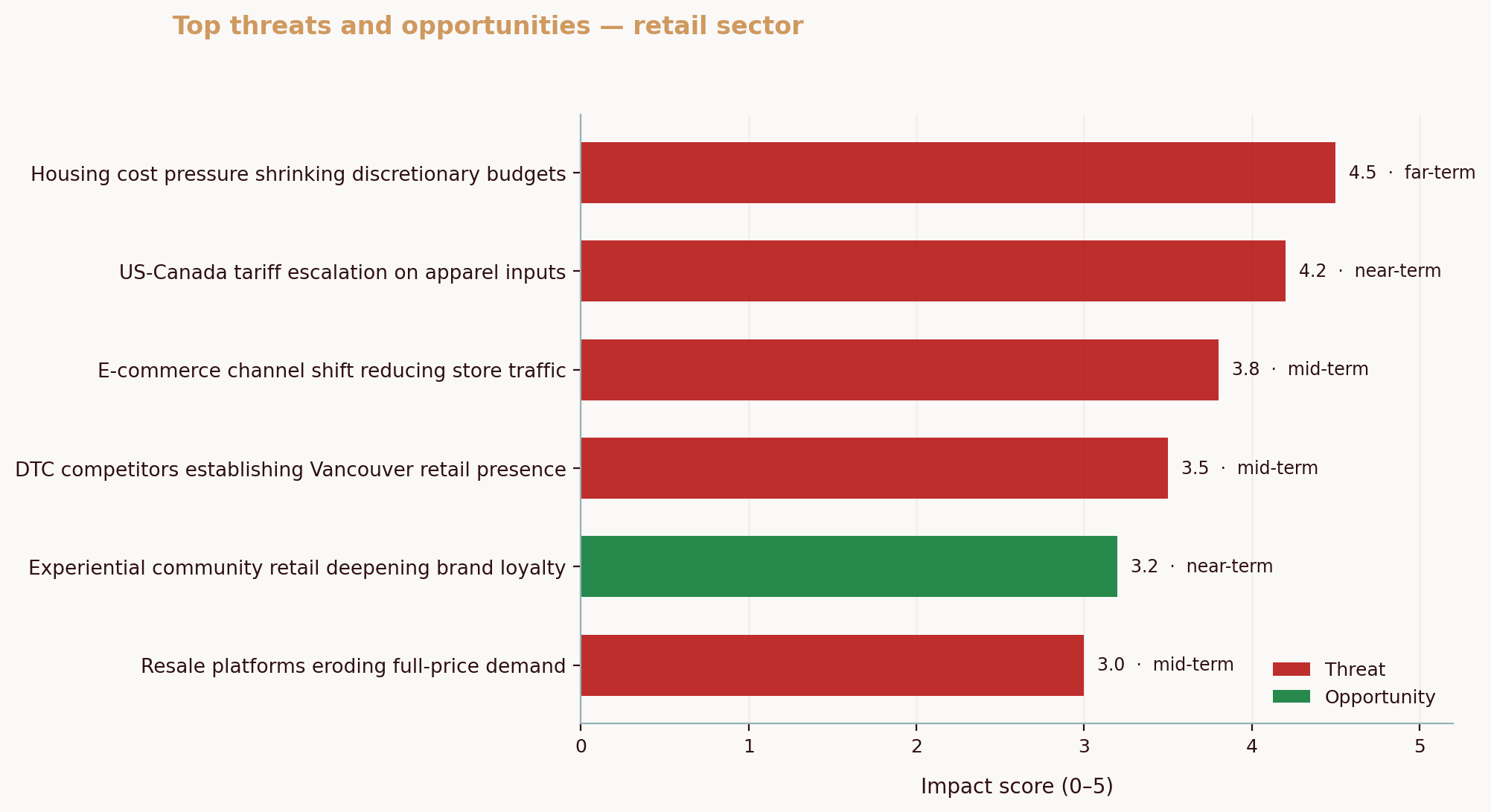
Proprietary snapshot from the front lines in Canada: across recent Canadian SMB intelligence studies from the Aurevon Intelligence Service, two patterns stood out. In Calgary’s custom metal fabrication market, review scores cluster near perfect, which shifts the battleground from quality reassurance to being found, proving supply‑chain reliability, and demonstrating real technology adoption like CNC automation and AI‑guided welding. In Vancouver’s athletic wear market, one retail business that once dominated local social conversation is now being squeezed at once by global entrants on the ground and influencer‑led brands online, while consumers question premium pricing. Translation for any SMB: once baseline trust is commoditized by universally high ratings, visibility, proof of capacity, and pricing narratives do the heavy lifting.
Here’s a side‑by‑side to make the drivers and their mirrors tangible.
| Driver | Barrier | Impact on Purchase Decision |
|---|---|---|
| Trust (clear credentials, security signals, credible reviews) | Doubt (no reviews, weak security cues) | Buyers hesitate or abandon due to perceived risk. |
| Clarity (transparent pricing and simple steps) | Hidden costs or vague scope | Buyers feel tricked, postpone, or leave for a clearer competitor. |
| Urgency (authentic, time‑bound reasons to act) | No timing trigger | Buyers defer decisions and never return. |
| Social proof (testimonials, case examples, user content) | Silence from customers | Buyers must self‑validate, which slows or stops action. |
| Ease (fast load, few fields, flexible payments, quick replies) | Friction at any step | Momentum dies, abandonment rises, support costs climb. |
💡 Pro Tip
Ask for testimonials with a prompt that makes specificity easy: “What was happening before you hired us? What changed? What result can you share?” Pair each quote with a face, a role, and a city when possible. If you have a strong Google Reviews rating or a positive Better Business Bureau profile, surface it beside the quote to strengthen the signal. Rotate three of these on top‑of‑funnel pages where new visitors decide whether to keep reading. Want help choosing who to ask? Start with customers in the same segments as your top competitors, then compare gaps in your proof points using a quick competitor SWOT analysis.
If the drivers pull buyers forward, their opposites push them back. Let’s name those head‑on.
Five Barriers to Purchases and Why People Don’t Buy
These are the conversion barriers you can actually control.
Hidden costs. Few things sour a purchase faster than a “final price” surprise. Add‑on fees and shipping revealed late trigger abandonment because they violate expectation symmetry. This is where policy meets perception. Retail surveys in Canada show shoppers comparing more aggressively and watching for total cost, not just sticker price. Communicate shipping, taxes, and surcharges early or bundle them into clear tiers. If your industry changes fees often, publish how and when you update them. Buyers do the math anyhow. Make it easy.
Slow response times. Minutes matter. For service businesses, the first competent reply usually wins. Even a short “Got this, working on a quote, expect it by 3:15 pm” message buys trust and time. This is especially true when urgency is real, like HVAC failures or same‑day catering. If you’re swamped, publish response SLAs where buyers see them. Then meet them. See the difference?
No reviews or testimonials. Silence breeds doubt. When real peers vouch for you, buyers shortcut research. When they can’t find proof, they assume risk sits with them. In regulated or B2B contexts where public reviews are rare, testimonials and short case notes that spell out “problem, action, result” fill the gap. Lean on results that align to purchase decision factors your audience already weighs: time saved, cost avoided, uptime increased.
Complicated processes. Extra clicks, lengthy forms, confusing document requests, narrow payment options, or checkouts that break on mobile all cause friction. Baymard’s benchmark shows UX problems still account for the majority of preventable abandonments, which means design and process debt have direct revenue impact. If your form must be long, show progress, save state, and let people finish later. If your payments are limited, add one trusted wallet option and one financing or installment option. Small improvements here compound.
Impersonal communication. Robotic tone and generic templates create distance. Buyers want signals that you heard their use case. That does not require lengthy essays. It can be as simple as a first sentence that mirrors their language (“You mentioned your compressor fails after 8 hours on hot days. The fix is usually X or Y, here’s how we’ll confirm which in 24 hours.”). Tone multiplies or cancels all the other work you do on trust and clarity.
What does this mean for you? If you can’t diagnose all five barriers overnight, start where Canadian buyers flinch most: trust and total cost. TransUnion’s Canadian data links abandonment directly to fraud and security anxieties, which means your trust cues are not just decoration. Pair that with clear, early pricing and you remove two of the biggest brakes. [Source: TransUnion] (https://www.globenewswire.com/news-release/2025/04/09/3058210/0/en/TransUnion-Study-Finds-More-than-Half-56-of-Canadians-Said-They-Were-Targeted-by-Fraud-in-Second-Half-of-2024.html). In several retail surveys summarized by the Retail Council of Canada, shoppers in 2025 started earlier, compared harder, and hunted for value more than before, which amplifies the penalty for anything that feels hidden. [Source: RCC] (https://www.retailcouncil.org/press-releases/canadians-keep-gift-spending-steady-and-push-deal-hunting-to-new-heights/).
One more Canadian signal from on‑the‑ground intelligence: in our analysis of a Saskatoon bar, diners demanded better value, stronger food safety assurance, and more compelling atmospheres at the same time, creating triple pressure on margins. If you run hospitality, that trifecta heightens the need to surface safety and value cues early, not just ambiance at the door.
Before/after to bring it home:
- Before: A landscaping firm accepts quote requests through a generic form. Replies appear 24–48 hours later with a wall of text and a total at the bottom. Abandonment is high.
- After: The form asks three scoped questions with photo upload, returns an instant price range and service window, and auto‑books a 10‑minute call for edge cases. The first “yes” happens on the form itself. Sales cycle shortens. Price objections drop.
Self‑Audit Checklist: Find Friction in Your Purchase Decision Path
Here’s a hands‑on walkthrough to audit your own staircase of small “yes” decisions. Treat this like a one‑day field test, then repeat monthly for a quarter.
1) Search like a buyer. Use the top five queries your customers use. Where do you rank and what does your first impression look like in the snippet or ad? If a competitor outranks you with clearer copy, capture screenshots for side‑by‑side review. For competitive clarity exercises, this playbook helps: how to identify your real competitors.
2) Speed‑test your first click. On mobile, land on your homepage and your top service or product page. Do they render in under three seconds on average connections? If not, buyers feel the drag. Fixing speed lifts every downstream “yes.”
3) Read the promise line. Your H1 should name the buyer’s job to be done and your specific angle in one line. If it sounds like anyone in your category could’ve written it, rewrite.
4) Trace the money. List every price element a buyer encounters from first impression to checkout or contract. Are any added late? Move them earlier or bundle them into tiers.
5) Proof above the fold. Do you show one concise, specific testimonial or case note on your top entry pages? If not, add one that mirrors your best‑fit segment. If your Google Reviews rating is strong or your Better Business Bureau profile is positive, position those near the proof. Rotate these quarterly. For guidance on crafting case‑relevant proof, map what rivals show in their proof sections with a quick competitor SWOT.
6) Shorten the ask. Count form fields. Can you remove two without compromising delivery? If not, can you defer them until after the initial “yes” moment?
7) Offer choice, not chaos. Do you provide at least two widely trusted payment options plus one financing or buy‑now‑pay‑later choice if relevant? If your audience is B2B, do you support PO or invoice flows? Buyers equate payment flexibility with professionalism. If you need a recognizable wallet, add PayPal.
8) Set and keep response SLAs. Publish “we reply within X minutes during business hours” and meet it with lightweight automation that triggers a human handoff. BDC recommends using analytics to spot drop‑offs; apply the same rigor to response time metrics, then fix the worst gaps first. [Source: BDC] (https://www.bdc.ca/en/articles-tools/marketing-sales-export/sales/internet-marketing-4-steps-improve-sales).
9) Stage authentic urgency. Inventory counters, seasonal timelines, or price reversion dates work if accurate. Fake scarcity backfires. If you run promotions, log them publicly with start and end dates. This builds trust while still prompting action.
10) Shadow‑shop competitors. Complete one full buying flow elsewhere. Note where you felt confident and where you hesitated. If a rival shows more transparent total cost or smoother mobile checkout, capture it. Want a structured way to track these moves without new software? Try the simple approaches here: how to track competitor pricing and marketing.
Do this today: rewrite the first two sentences of your most visited landing page to say exactly who you help, what outcome you promise, and what happens next. Then add one 40‑word testimonial from a customer in your highest‑value segment. Small edit, outsized effect.
Three Quick Wins to Remove Buying Barriers
- Publish a “how buying works” panel on top‑entry pages. In three steps, explain selection, payment, and delivery or kickoff. Add price ranges and timelines in plain language. This quiets uncertainty, reduces support emails, and speeds the second “yes.”
- Install a 10‑minute response standard. Use an inbox triage template that acknowledges the request, sets expectations, and asks one clarifying question. Pair with an after‑hours auto‑reply that offers a self‑service step for night and weekend visitors. Many SMBs find this alone increases quote acceptance because momentum never dies.
- Put real proof where new visitors look first. Rotate three short testimonials or one mini case note above the fold. If you sell to multiple segments, map one proof to each. Then retarget visitors who read these proof blocks with matching creative for seven days. You align what they saw with what you show next, which reinforces memory and trust.
These moves are fast, and they compound. To turn them into habit, pick a weekly 30‑minute “friction fix” slot and never skip it.
Common Questions About Customer Purchase Decisions
What are the most common reasons customers abandon their carts?
Surprises and slowdowns. The most cited culprits are unexpected shipping or fees, checkout forms that feel long or confusing on mobile, and weak trust signals near the pay button. Consumers in Canada also flag fraud and security worries as a reason to stop partway through a purchase, which means recognizable payment methods like PayPal and clear privacy language can move the needle. Globally, the average cart abandonment rate hovers around 70%, so even small usability gains add meaningful revenue for SMBs with modest traffic. [Sources: Baymard and TransUnion] (https://baymard.com/lists/cart-abandonment-rate) (https://www.globenewswire.com/news-release/2025/04/09/3058210/0/en/TransUnion-Study-Finds-More-than-Half-56-of-Canadians-Said-They-Were-Targeted-by-Fraud-in-Second-Half-of-2024.html).
How can I measure friction points in my buying process?
Instrument the staircase. Track where visitors land, where they scroll, what they click, and where they quit. Tools like Google Analytics and session‑recording platforms surface patterns, but the real win is pairing data with fast experiments. Change one variable at a time, run A/B tests on headlines or form length, and watch drop‑off rates by step. BDC emphasizes mapping “drop‑off points” so you pinpoint which “yes” is failing, then iterate there first. A simple practice is to review 10 session recordings each week and write down one friction fix you can ship in under an hour. [Source: BDC] (https://www.bdc.ca/en/articles-tools/marketing-sales-export/sales/internet-marketing-4-steps-improve-sales).
What role does urgency play in customer purchases?
Urgency shortens the gap between intent and action when it is real and relevant. When buyers see that a price will revert, delivery windows are filling, or a seasonal deadline is near, they re‑prioritize the decision. The key is authenticity. If urgency cues don’t match reality, trust erodes and future campaigns underperform. Marketers often focus on discounting, but time‑based or capacity‑based prompts preserve margin while moving decisions forward. Ask yourself, “What honest timing signal would matter to my best buyers this week?”
How do I effectively use social proof in my marketing?
Make proof do more than decorate your footer. Put one strong, segment‑relevant testimonial or case note near the top of your most visited pages. Pair each proof with a face, role, and location to increase believability. If you sell to distinct industries, maintain a small library of quotes and rotate them by page and campaign so visitors see themselves in your customers. Pull short, specific Google Reviews quotes with permission so visitors connect the dots between public ratings and real outcomes. In price‑sensitive environments, social proof can counteract sticker shock by emphasizing outcomes and value instead of raw cost. Retail studies in Canada suggest comparison behavior is at an all‑time high, which makes specific, relatable proof more persuasive than generic star averages. [Source: Retail Council of Canada] (https://www.retailcouncil.org/press-releases/canadians-keep-gift-spending-steady-and-push-deal-hunting-to-new-heights/).
Ready to turn these insights into traction this week? Start by mapping your staircase of small “yes” decisions, then ship one improvement in each category: trust cue, clarity tweak, and response speed. If you want outside perspective on the competitive factors shaping those “yes” moments, Aurevon offers the Ecosystem Dynamics Report to reveal who is influencing your buyers, how rivals frame value, and where friction hides. Learn more and request a sample here: Ecosystem Dynamics Report.
Mitchell Ozmun
SMB Researcher, Business Analyst - Saskatchewan Born and Raised