5 Key Reasons Why Customers Should Choose You in 2026
Your inbox pings. A lead bounces. Another prospect ghosts after “thinking it over.” You stare at your website and feel the knot in your stomach tighten. Good service. Solid ratings. Smart team. So why aren’t more people saying yes? In 2026, attention is short and comparisons are instant. If your message doesn’t make a clear, outcome‑focused case for why customers should choose you, they move on. Fast.
Knowing you’re good isn’t enough. Buyers need to see, in plain language, how life gets better when they choose you. That means leading with the problem you solve, backing claims with specific results, sharing real customer stories, showing your process so expectations are clear, and being transparent about trade‑offs and pricing so prospects can compare you to alternatives without friction. Do that, and you’ll stop sounding like everyone else. You’ll start sounding like the business they were looking for. Strong value communication raises buying confidence without gimmicks.
The Disconnect: Communicating Value the Way Customers Hear It
Most small businesses talk about what they make, not what it makes possible. You’ll see “premium materials,” “ISO‑certified process,” “latest platform.” Those sound impressive in a proposal. They don’t answer the only question a buyer has when they land on your page: Will this deliver the outcome I care about?
Feature‑first messaging forces customers to translate. Translation is work. And people won’t do extra work when every competitor is a browser tab away. Canadian retail data shows e‑commerce grew 9% in 2024, which means more decisions are made side‑by‑side on screens where clarity wins and fuzziness loses. If you don’t spell out outcomes, a competitor who does will harvest your intent. Source: Statistics Canada, Annual retail trade 2024.
Here’s the sting: even “great quality” isn’t a differentiator in crowded markets. In our analysis of a Calgary custom metal fabricator (Aurevon Intelligence Service, Canadian manufacturing SMB, March 2026), near‑perfect review parity across competitors shifted the battleground from quality assurance to content visibility, localized supply confidence, and proof of technology adoption. Translation: when everyone is “excellent,” buyers pick the one who explains results and risk reduction most clearly.
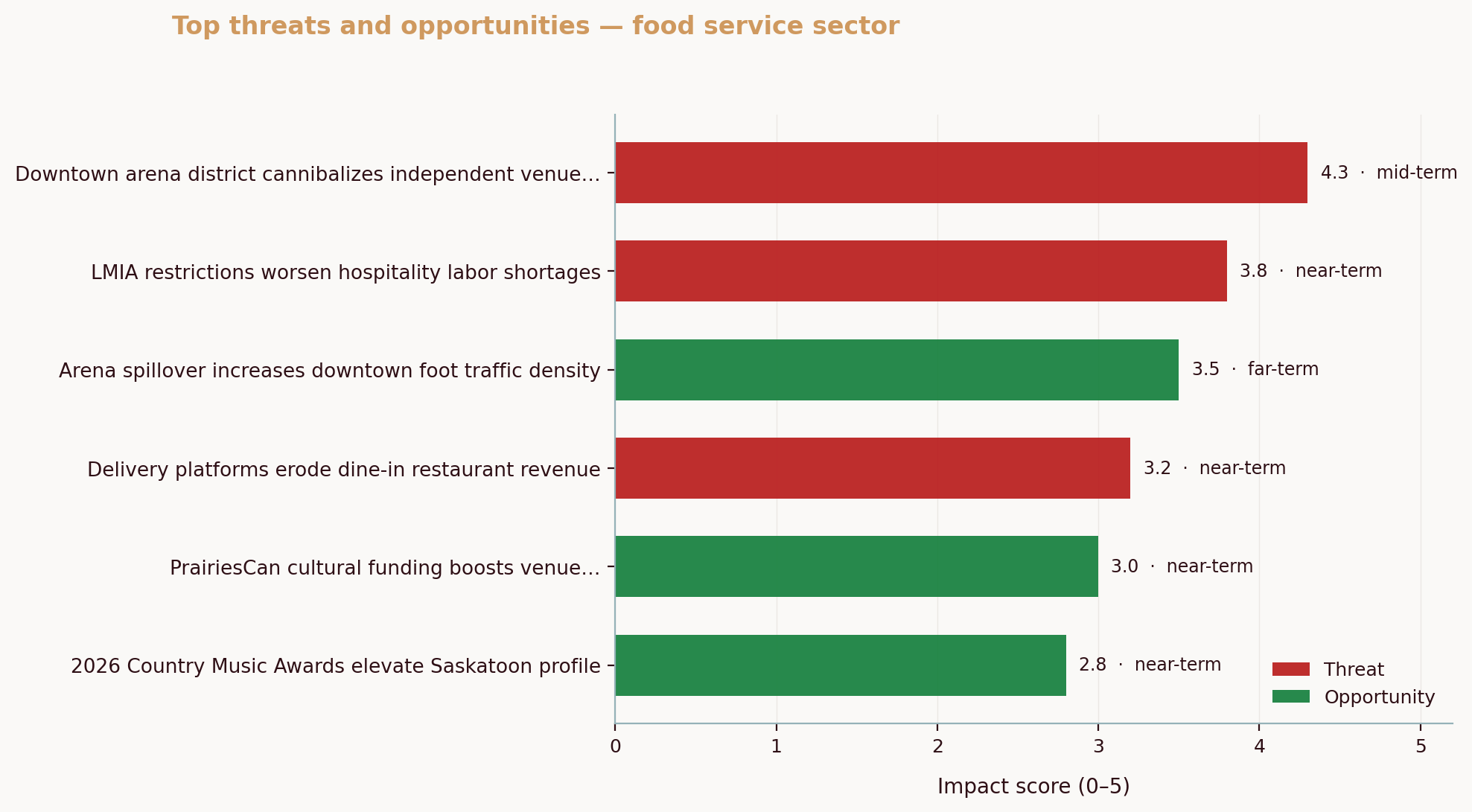
Entertainment offers a similar lesson. In our work on a Saskatoon live‑music restaurant (Aurevon Intelligence Service, Canadian food service SMB, April 2026), programming momentum stayed strong, but two forces threatened demand: emerging Regina mega‑venues and rising frustration with ticket value. Outcome‑focused messaging (“great sound, fair ticket value, reliable calendar”) becomes survival, not polish, when audiences feel squeezed.
Think of it like sending two salespeople to pitch the same client. One recites tool specs. The other paints a before/after picture of the client’s next quarter, then shows the steps to get there. The second one doesn’t just inform. They de‑risk the decision.
The takeaway isn’t that features don’t matter. It’s that features without context create cognitive overhead. Price‑sensitive consumers, who compare more than ever, gravitate to vendors that make outcomes, process, and trade‑offs obvious. In PwC’s 2025 Customer Experience Survey, 69% of consumers said comparing prices significantly influences their decision to engage with a brand. If you don’t make apples‑to‑apples comparisons easy, you’re inviting the wrong comparison. Source: PwC, 2025 Customer Experience Survey.
So the risk is real. What can you do about it?
5 Ways to Show Value
If your goal is to convince customers to buy, you need messaging that matches how people decide: problem first, outcome clear, proof visible, process transparent, comparison honest. Here’s how to build it.
1) Lead with the problem and outcome
Start every key message by naming the problem in your customer’s words, then promise a measurable outcome. A simple pattern works: “When you’re facing [problem], we deliver [specific outcome] in [timeframe or conditions].” It forces you to speak to what buyers actually value.
- Here’s how this actually works: Collect the top three reasons prospects contact you. Turn each into a problem‑outcome line. For example, instead of “We install commercial HVAC systems,” try “If rising energy bills are hurting margins, we cut your HVAC energy use by 18–25% in the first season, with documented utility data.”
Why it matters: In McKinsey’s 2024 B2B growth research, winners treat digital and sales content as part of the buying journey, not a brochure. Clarity about outcomes fuels faster consensus in complex purchases. Source: McKinsey, B2B Pulse 2024.
Analogy: Outcome‑first messaging is like a GPS pin. If you don’t set the destination, no route feels right.
2) Use numbers and timeframes, not adjectives
Specificity cuts through skepticism. Replace “fast, reliable, premium” with concrete numbers that map to savings, time, or risk. If you lack proprietary benchmarks, start small: median turnaround time, on‑time completion rate, documented warranty claim rate, percentage of repeat customers. Even a tight range beats soft descriptors.
- Practical move today: Audit your homepage and Google Business Profile for vague claims. Anywhere you see “high quality,” swap in one concrete number you can evidence. Where it helps, surface third‑party proof with a small reviews module that pulls your average from Google Reviews or Trustpilot, and link to your Better Business Bureau profile if accredited. Repeat monthly. Over time, your copy becomes a library of proof points.
The Canadian consumer climate rewards clarity. With retail price sensitivity high and e‑commerce still rising, shoppers are primed to compare on value delivered, not poetry. Source: Statistics Canada, Annual retail trade 2024.
3) Tell short, outcome‑anchored customer stories
Social proof works best when it mirrors your buyer’s situation. Move away from “happy customer” blurbs and toward 100‑word snapshots with context, barrier, action, and result.
- Template: “A [customer type] in [city/industry] struggled with [barrier]. We [action]. In [timeframe], they saw [result metric], which let them [business outcome].”
- Why it works: It helps prospects “pattern match” themselves into the story and reduces the fear of being the outlier who won’t see results.
- Make it verifiable: Pull snippets that align with the story from Google Reviews or Trustpilot, and, when relevant, reference your Better Business Bureau rating to support trust building without hype.
In retail, narrative proof matters even more when category chatter is crowded. Our analysis of a Vancouver athletic‑wear retailer (Aurevon Intelligence Service, Canadian retail SMB, March 2026) found its dominance in local conversation eroding under pressure from global entrants and persistent pushback on premium pricing. Snackable, outcome‑anchored customer stories help reframe price as value when competitors flood feeds.
4) Show your process to de‑risk the decision
Uncertainty kills conversion. A simple process map, three to five steps with what you do, what they do, typical timing, and one expectation per step, reduces perceived hassle and signals operational maturity.
- Add one friction‑breaker per step: calendar link, sample deliverable, FAQ link, or short video.
- Keep it visible: place the process above the fold on your homepage and services pages, not buried in PDFs.
Analogy: A clear process is scaffolding. It makes a tall project feel climbable. It is quiet customer persuasion that builds buying confidence.
5) Invite direct comparison to alternatives
Here’s the contrarian move: build the comparison yourself. Buyers will compare with or without you. When you frame the variables, total cost of ownership, time to value, support model, contract flexibility, you guide how “better” is judged.
- Action: Publish a simple “Compare your options” matrix. Include a DIY path, a low‑cost competitor, and your approach. Be transparent about where an alternative can be better for certain cases.
- Why this helps: It signals confidence and reduces stalls. And it aligns with how consumers decide, especially in price‑sensitive periods where transparency drives trust. Source: PwC, 2025 Customer Experience Survey.
Want a research‑backed nudge? Companies that align content to key buying moments and remove ambiguity about next steps grow faster, and leaders who embed data and clarity into commercial motions outpace peers. Source: McKinsey, B2B Pulse 2024.
- Do this today: Draft one comparison row for “Time to First Result.” Fill it with real numbers. Ship it.
🔑 Key Takeaway
The fastest way to increase engagement is to spotlight outcomes, not features. When buyers instantly see the result you deliver, and how it compares to other paths, decisions accelerate.
With outcomes, numbers, stories, process, and comparison in hand, the next step is to see what this shift looks like in real copy.
Before/After Examples
Abstract ideas only stick when you watch them change the words on the page. Below are three quick rewrites across different industries. Each “before” is feature‑centric. Each “after” reframes the same reality as an outcome buyers can feel.
Example 1: Manufacturing (B2B)
- Before: “We use AI‑assisted welding robotics and CNC automation to deliver precision parts.”
- After: “Cut your rework and scrap by 30–50% with precision parts shipped on the date we commit, supported by local supply you can audit.”
What changed? The tech remains implied, but the promise shifts to waste reduction, delivery reliability, and local assurance, precisely where the Calgary metal‑fabrication market is competing when review scores converge.
Example 2: Restaurant and live events (B2C)
- Before: “Premium sound system, pro lighting, and guest DJs every weekend.”
- After: “Your night out sounds great and ends on time. Clear ticket value, zero surprise fees, and a lineup that balances rising acts with crowd favorites, week after week.”
What changed? The gear is still there. The copy solves the buyer’s anxiety: “Will this be worth it?” That matters when audiences scrutinize ticket value.
Example 3: Specialty retail (B2C)
- Before: “Premium technical fabrics engineered for performance with trend‑forward design.”
- After: “Keep the fit and feel you love, plus training‑grade performance that survives sweat and spin cycles. If it doesn’t outlast three comparable items in your drawer, swap it.”
What changed? The promise connects price to lifespan and performance under real conditions, countering premium‑price skepticism head‑on.
Here’s a quick comparison you can mirror on your site:
| Feature-Focused Messaging | Value-Focused Messaging | Industry |
|---|---|---|
| “AI welding robotics with tight tolerances.” | “Fewer defects and on‑time delivery you can plan production around.” | Manufacturing |
| “Pro sound and lighting with ticketed shows.” | “Fair‑value nights out: great acoustics, clear pricing, and shows that start when they say they will.” | Restaurant/Entertainment |
| “Premium technical fabric, trend‑forward.” | “Performance that keeps shape and color after 30 washes, or swap it.” | Retail |
Before: Your website opens with your toolset and credentials. After: It opens with your buyer’s outcome, evidence, and what happens next. See the difference?
For reader depth, here are related field guides you can use to sharpen these drafts and keep them honest: competitor mapping, SWOT, and price/marketing tracking. Try these primers: identify your real competitors, build a competitor SWOT, and set up a no‑cost system to track rival pricing and marketing.
Deployment of Messaging to Win Decisions
You’ve reframed the message. Now deploy it where decisions actually happen. Think of each placement as a small billboard that must answer “What do I get, how soon, and how sure are you?”
Website homepage
Open with your top problem‑outcome line above the fold. Follow with two proof points (numbers or micro‑stories), a three‑ to five‑step process, and a “Compare your options” link. Add a visible trust block that shows your Google Reviews or Trustpilot average and, if it fits your category, a Better Business Bureau link. On services pages, let each service begin with a “Who it’s for, why it works, and what success looks like.”
Google Business Profile
Your 750‑character description should mirror your homepage promise, not your founding story. Pin two outcome‑oriented updates monthly (“Cut lead times by 22% with our same‑week slot expansion”) and use Q&A to answer comparison questions buyers already ask. Encourage recent Google Reviews by prompting satisfied customers and respond to every review to reinforce trust building. If you’re not sure who your true local competitors are, this explainer can help you avoid the usual blind spots: identify your real competitors.
Social media bios and pinned posts
Replace slogans with outcomes and process. Pin a 45‑second video that states your promise, shows a recent result, then invites a direct comparison. Keep links updated to your comparison matrix or process page. If your category is review‑saturated, clarity and visibility win more often than “better” claims.
Email signatures and outreach
Add a single‑line value statement and one proof point in your signature. When sending proposals, include a plain‑English “Why this vs. alternatives” section near the top. Tie it to a public comparison page so prospects can share it internally without your narration. To keep this page grounded in reality, maintain a living competitor SWOT and refresh it quarterly: start with this SWOT template and a lightweight system to track competitor pricing and messaging.
Verbal introductions
Train your team to lead with outcomes. Role‑play short intros using the problem‑outcome pattern and a micro‑story. If you sell B2B, align inbound scripts with the same language prospects see on your site to avoid “two versions of the truth.” Consistency across touchpoints is a growth marker in the McKinsey research on commercial leaders. Source: McKinsey, B2B Pulse 2024.
What does this mean for you? Buyers in Canada are price‑aware and value‑oriented right now. Transparent comparisons and outcome claims that you can evidence on the page help you earn the click and the call in a market where demand has been uneven. CFIB’s barometer has reflected soft demand across many sectors, so sharpening how you communicate value is one lever you fully control. Source: CFIB, March 2026 Business Barometer.
The Grandma Test
If your grandmother can read your homepage and tell a friend, in one breath, why customers should choose you, your messaging passes. Clarity beats clever. Here’s a fast check: cover your logo, read the first screen of your site, and ask, “Would a non‑expert understand the problem we solve, the result we deliver, and what happens next?” If not, rewrite until the answer is a confident yes.
Common Questions About Communicating Value
How do I convince customers to choose me?
Lead with the problem you solve in the customer’s words, then promise a measurable outcome and show one proof point. Add a simple three‑ to five‑step process so buyers see what happens next. Close with a transparent comparison that outlines trade‑offs between your offer, DIY, and low‑cost alternatives. This mix reduces friction and strengthens customer persuasion. Sources: Statistics Canada, Annual retail trade 2024, PwC, 2025 Customer Experience Survey, McKinsey, B2B Pulse 2024.
What makes customers trust a business?
Transparency and third‑party validation. Be specific about results and timelines, publish your process, and show independent signals like Google Reviews or Trustpilot ratings and a Better Business Bureau profile if relevant. Respond to reviews, good or bad, and keep numbers current. Trust building is a habit, not a headline.
How do I communicate my value?
Focus on outcomes, not inputs. Interview recent customers to learn what changed after they chose you, then translate those insights into concise problem‑outcome lines, short stories, and quantifiable proof points. Keep wording consistent across your site, Google profile, and sales materials so buyers hear one clear promise at every touchpoint.
What should I put on my website to attract customers?
Above the fold, place a problem‑outcome headline, two proof points, and a short process with timing. Add a clear call to compare options and a visible reviews block that surfaces recent Google Reviews or Trustpilot signals, with a Better Business Bureau link if applicable. This layout answers what buyers need to know to act now.
Final “do this today” move: Open your homepage, replace your first headline with a problem‑outcome line, add one number you can prove, and link a three‑step process. Then ask a non‑expert to read it and explain, in one breath, why customers should choose you. If they can, ship it.
A final note for readers who want structured outside validation and market context: Aurevon’s Ecosystem Dynamics Report brings third‑party clarity to the exact outcomes your buyers care about and the comparisons they’re already making. If outcome‑first messaging is your next step, you can learn more or get in touch at aurevon.ca.
Mitchell Ozmun
SMB Researcher, Business Analyst - Saskatchewan Born and Raised