How Niche Marketing Can Boost Your Small Business Success: why niche down small business
Inbox pings. Another “can you also do…?” request. You say yes. Again. The project scope balloons, the rate doesn’t, and the client who found you by price is now dictating how you work. That’s the spiral many small business owners live in: serving everyone and being remembered by no one. If you’ve wondered why niche down small business advice keeps popping up, it’s because focus changes the math of your time, your pricing, and your reputation.
Trying to be “for everyone” flattens your signal in a market already buzzing with noise. Messages sound generic. You get shopped on price. The work stays shallow because you’re always starting from scratch. The result isn’t more opportunity; it’s more low‑margin stress. Narrowing your focus does the opposite: your message lands, your expertise compounds, and referrals finally arrive with the right expectations. It is the classic generalist vs specialist tradeoff.
Related: 10 Reasons Why Your Small Business Will Fail - and How To Avoid These Tragic Mistakes — Philip VanDusen
The Importance of Niching Down
Niching down means choosing a specific customer segment and problem where you’ll be the obvious pick. It isn’t a slogan change. It’s a strategic constraint that guides what you say, who you serve, and which opportunities you politely decline. In a crowded economy where small firms make up the vast majority of employer businesses in Canada, generalist messaging gets drowned out. In 2023, businesses with 1 to 19 employees represented 86.7% of all employer businesses and employed 5.2 million people; in other words, you compete against a sea of similar‑sounding providers every day. That scale puts a premium on clarity. Statistics Canada
Specificity is your megaphone. When your homepage, proposals, and case studies all point to one type of buyer with one set of pains, prospects feel seen. That feeling is not soft; it correlates with performance. Companies that personalize experiences to specific segments often see 5–15% revenue lift, because customers move faster when the fit is obvious. Niche positioning is how a small team earns that clarity at low cost. McKinsey
In strategy terms, this is market specialization. It matches the focus strategy in Porter’s Generic Strategies, and when your offer creates clear value where rivals are not fighting head‑to‑head, it can resemble a Blue Ocean Strategy. Target market narrowing turns the volume up on relevance, so buyers know quickly that you are for them.
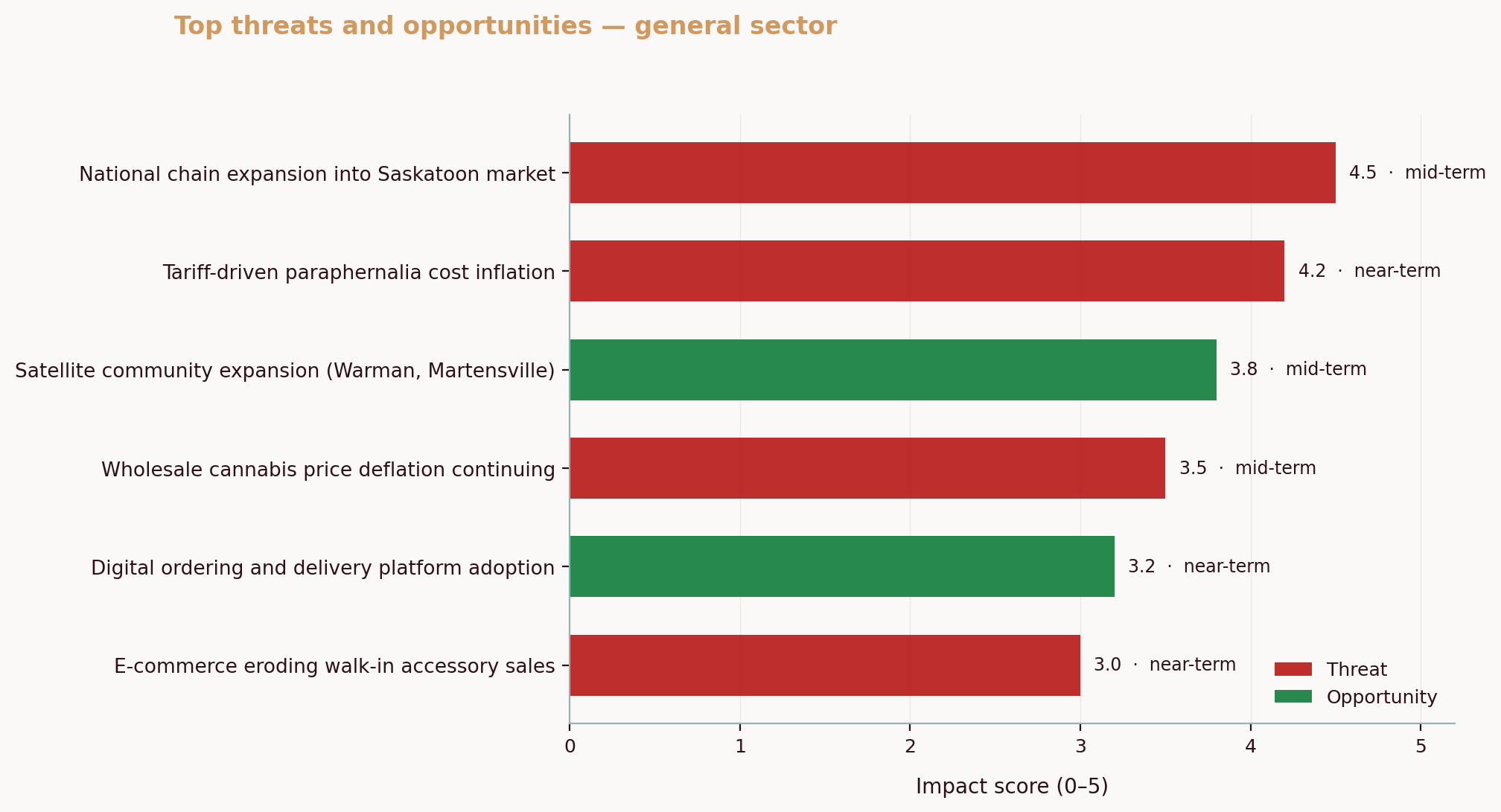
Focus also reduces competitive head‑to‑head fights. You stop pitching against “everyone who does everything,” and start competing in a smaller arena where your experience is visible. Proprietary intelligence from Canadian markets shows this dynamic at street level. In our analysis via the Aurevon Intelligence Service of a Saskatoon cannabis retail corridor and a small Prairie‑market restaurant, two signals consistently separated leaders: speed and social proof for the former (delivery responsiveness and curated premium selection), and dominant review credibility for the latter (a near‑perfect rating paired with substantial local review volume). When a business is the go‑to for a precise promise, trust compounds and price sensitivity fades. (Aurevon Intelligence Service analyses, March 2026.)
What does that mean for a stretched SMB owner? Less context‑switching and better margins. You’ll spend your days solving the same class of problem, which accelerates learning, templates your delivery, and shortens sales cycles. Your calendar steadies because you’re not reinventing your offer with each inquiry. See how that works?
If you are asking whether your business should serve a niche market, the practical answer is yes when you want pricing power, faster close rates, and messaging that buyers act on. That is what a focus strategy delivers for small teams.
🔑 Key Takeaway
Niching down allows businesses to stand out and create strong customer connections. When people can name what you’re the best at, they hire faster and refer more confidently.
For more ways to map rivals inside your chosen corner of the market, see these field guides: identify your real competitors and a practical competitor SWOT template.
Examples of Broad vs. Niche Targeting
Consider two photographers. The first says: “I shoot weddings, products, pets, and headshots.” The portfolio is a buffet. Impressive, but scattered. The second leads with: “Restaurant food photographer for indie eateries and regional chains.” The portfolio shows steam on ramen, gloss on barbecue, and moody cocktail shots. Who gets hired faster by a new bistro opening in your city? The specialist. And who can charge more per shoot? Again, the specialist, because the risk for the buyer is lower and the fit is tighter.
Before: “Do you do menu photos? What’s your rate? Can you handle tight kitchen spaces and dim dining rooms?” After: “We loved your work for three places like ours. When can you come in? Our chef wants to collaborate.” That’s what focus does to the conversation.
Or think about a bookkeeping firm. One advertises, “We serve all small businesses.” Another leads with, “CFO‑lite services for dental clinics with 3–10 chairs.” The second knows payroll cycles, insurance quirks, and equipment depreciation schedules. Calls from that niche move straighter from interest to engagement because the firm’s experience de‑risks the decision.
A final example from tech services: a managed IT provider can pitch to every SMB, or it can become “the helpdesk and security stack for Shopify sellers between $1–10M GMV.” The second version can publish checklists that map to a store owner’s day, anticipate seasonal spikes, and pre‑package incident response. Proposals feel tailored because they are.
Specialization also fuels word‑of‑mouth. People trust recommendations from people they know more than any ad format, and peer recommendations remain the most‑trusted influence channel globally. A clear niche gives customers a short sentence they can repeat: “They’re the restaurant photographer.” That sentence spreads farther than a long list of services ever will. Nielsen
If you’re wondering whether this risks “leaving money on the table,” remember your constraint: time. With labour and input costs still weighing on Canadian SMBs, you can’t afford low‑margin chaos. Focus helps you invest scarce hours where returns are highest. CFIB
Five Ways Broad Targeting Hurts Your Business
Broad targeting sounds safe. Is it bad to have too broad a target market? In practice, it’s a slow leak in five places.
1) Generic messaging dulls your brand
When you try to speak to everyone, you default to vague claims: “quality service,” “affordable pricing,” “custom solutions.” Buyers mentally file you with a dozen others. Specificity sharpens memory. “We design accessible websites for physiotherapy clinics” tells a pain story and a compliance story in one line. It sticks.
Analogy: A lighthouse is bright because its beam is narrow. Spread the light in all directions and ships see nothing useful.
2) Price competition eats margin
Generalists face constant price checks because buyers can’t see what makes them different. Specialists earn pricing power by reducing buyer risk. That’s not theory. Customer‑specific experiences boost conversion and revenue, which is how specialists defend rates without endless haggling. McKinsey
If pricing pressure is your daily grind, build an evidence‑based view of competitors’ offers and price moves. Start with free methods to watch pricing and promotions in your category: we’ve published a walkthrough for that exact task, no paid tools required. Track competitor pricing and marketing
3) Shallow expertise slows delivery
Saying “yes” to everything means you’re always climbing a new learning curve. That burns time and makes outcomes uneven. In focused work, patterns repeat: the same objections, the same two or three root problems. You build playbooks, cut rework, and improve quality. Repetition, not heroics, creates excellence.
4) Scattered marketing spend wastes budget
A broad pitch forces you to advertise in too many places with too many messages. That fragments budget and attention. A clear niche lets you buy fewer channels and craft one high‑truth message for one intent. It’s like sending two salespeople to pitch the same client instead of ten salespeople to ten random doors.
Ground your spend by mapping real competitors and their strongest claims before you write another ad. If you haven’t done this lately, use this field guide to avoid guessing who you’re truly up against. Identify your real competitors
5) Weak word‑of‑mouth starves growth
Referrals move the fastest and negotiate the least. The catch: people need a simple label for you. “They do everything” kills referrals because it offers no hook. “They’re the person for live‑fire steakhouse photography” is a hook. Remember, personal recommendations top the trust charts year after year. Give customers a sentence worth saying. Nielsen
Comparison helps bring this home:
| Strategy Type | Examples | Benefits | Drawbacks |
|---|---|---|---|
| Broad targeting | “Full‑service photographer,” “All‑purpose IT,” “Bookkeeping for any SMB” | Larger theoretical market; easy to say yes | Generic message, constant price pressure, scattered ad spend, slow referrals |
| Niche targeting | “Food photographer for restaurants,” “IT for Shopify sellers,” “CFO‑lite for dental clinics” | Clear message, faster trust, process depth, stronger referrals, better pricing | Smaller top‑of‑funnel; requires discipline and saying “not now” to some work |
One more signal from Canadian streets: in our intelligence work, leading cannabis retailers along Saskatoon’s 8th Street corridor won not by broader selection but by speed to door and curated premium products, with review volume becoming the top trust separator. That’s niche execution, and it attracts decisively. (Aurevon Intelligence Service analysis, March 2026.)
Addressing Fears of Niching Down
Let’s surface the two loudest fears. If you are weighing “Should my business serve a niche market?”, choose the path that trades a wider audience for higher fit and stronger proof. That trade is usually worth it for small teams.
Fear 1: “I’ll lose potential customers.”
Some will pass you by, yes. The trade you’re making is higher fit for the ones who remain. And that fit shortens the sales cycle and reduces unpaid consulting. Middle‑market research echoes this: firms that grow past plateaus talk about reputation, trust, and niche as the engine of their wins with key clients. Harvard Business Review
Fear 2: “My market is too small.”
Small can be plenty. Your goal isn’t “everyone,” it’s “enough of the right ones.” A Canadian city can hold dozens of viable micro‑niches inside the same industry. The trick is choosing a segment where pain is acute and alternatives are fuzzy. In stressed cost conditions, focus is not just strategic, it’s protective; many SMEs still cite staffing and cost constraints as growth barriers, which means every unfocused hour is expensive. CFIB
Here’s a practical exercise that replaces fear with evidence if you are wondering how to narrow your business focus:
- Pull your last 20 paying customers. If you have fewer, use what you’ve got, but keep it real.
- For each, score profit (gross margin), enjoyment (would you work with them again), and ease (sales cycle length, revision cycles).
- Sort by combined score. Look for clusters: industry, company size, problem type, buying trigger.
- Write a one‑line niche from the pattern: “We do X for Y who struggle with Z.”
- Sanity‑check market size by counting reachable prospects in your region or channel. If you can list 100–300 targets, that’s often enough for a specialized service firm.
Do this today. It takes one focused hour and a spreadsheet. The output is a working niche statement you can test in live conversations this week.
Brief note on reputation mechanics in small markets: consistent proof wins. In a Saskatchewan hospitality scan this spring, a venue‑first restaurant sustained momentum by programming well in a competitive live‑music scene, even as consumer skepticism about ticketed event “value” rose and a nearby city’s mega‑venue plans loomed. Program excellence inside a precise promise held attention longer than a wide net ever could. (Aurevon Intelligence Service analysis, April 2026.)
If you want a second lens on your short list of targets, run a quick SWOT against the few players you’ll actually compete with. This template keeps you honest about where you can be “the person for X” in the next quarter, not the next decade. SWOT for small business
How to Market Your Niche Without Shutting Doors
You don’t need to slam doors to focus your front door. Lead with the specialty, keep optionality behind the scenes, and accept adjacent work when it’s a fit. This is target market narrowing done with common sense.
Start with message architecture, not a channel binge. Put your niche line at the top of your site and proposals. Show three proof points that match the niche: one case, one testimonial, one process snapshot. Order your portfolio so the first five examples mirror your ideal client. If you serve other categories occasionally, place them lower. You’re not hiding them; you’re prioritizing relevance.
Next, create a single “If this is you, here’s what to expect” page that explains scope, timeline, and success metrics in the language of your niche. Specialists soothe uncertainty by naming the path. That page becomes the anchor for every outreach email and the default link you send cold inbounds. When you know competitors will be side‑by‑side with you, it also helps to track their visible moves over time so your positioning stays precise. If you haven’t set up a lightweight monitoring routine yet, use this no‑frills walkthrough. Monitor competitor moves
Keep your intake door flexible with two guardrails:
- If a request lands outside your lane but scores high on profit and learning value, quote it at a premium and with a pilot. Make it worth the context switch.
- If it lands outside and forces you to build net‑new capabilities, refer it out and ask for a reciprocal referral in your lane. A niche is a referral magnet when your peers can describe you in one line.
Finally, give your sales time back. Broad marketers juggle many messages in many channels. Focused firms do fewer things with more relevance. Personalization to one segment often improves return on spend; it’s one reason niche positioning lifts revenue more reliably than generic campaigns. McKinsey And when your happy customers talk, they do more convincing than your ads ever will. Nielsen
Curious where your niche actually collides with competitors in your city? Map them the smart way before you commit copy to your website: who your competitors really are.
Common Questions About Niching Down
What if I have multiple interests or skills?
It’s normal to be multi‑talented. The goal isn’t to amputate skills; it’s to spotlight the one intersection of skill and market pain where you’re most valuable. Use the “last 20 customers” sort to find the pattern, then make that your lead message for 90 days. Keep a “bench” list of secondary offers you’ll accept when they’re profitable or strategically useful. Think of your niche as your storefront and your other skills as inventory in the back. When the right buyer walks in, you can still bring items out.
Will I lose potential customers by niching down?
Some will bounce because the message isn’t about them. The trade is better fit and faster close with those who remain. In an economy where small enterprises dominate the business landscape, clarity is often the only affordable edge you control. Statistics Canada And for many Canadian SMEs still facing labour and cost constraints in 2025, time spent on mismatched projects is a pure cost with little downstream benefit. CFIB If you want outside validation, research on midsize firm growth ties reputation, trust, and niche to durable wins. Harvard Business Review
How can I identify my niche?
If you are asking how to pick a business niche, run the four‑step exercise outlined above on your last 20 customers. Then validate demand: can you list 100–300 reachable prospects that match your pattern in your geography or channel? If yes, test one message change (site headline) and one proof change (swap in a niche‑aligned case study). Measure for 30–60 days: lead quality, sales cycle length, average deal size. Personalization research suggests that when the message matches the buyer, conversion moves; make your measurement that concrete. McKinsey
Can I still take on work outside my niche?
Absolutely. Your marketing narrows; your services don’t have to. Keep a clear rule: off‑niche work should either be high‑margin, fast to deliver, or teach you something that strengthens your core offer. If it’s none of those, refer it out and ask for niche‑aligned referrals in return. Referrals travel farther when your positioning is memorable, and peer recommendations tend to drive the most trust anyway. Nielsen
As you turn focus into action, one last reminder: don’t guess at rivals. Use structured competitor scans and a concise SWOT to keep your niche differentiated as conditions shift. Start here and save cycles you can put back into billable time: track competitors and build a small‑business SWOT.
If you’re ready to choose a lane and want an evidence‑based view of where your niche sits inside your local market, Aurevon’s Ecosystem Dynamics Report can show you how segments, rivals, and trust signals actually behave in your city. Learn more at aurevon.ca and decide where focus will pay you back fastest.
Mitchell Ozmun
SMB Researcher, Business Analyst - Saskatchewan Born and Raised