Setting Achievable Business Goals: A Canadian Guide for 2026 (setting business goals small business)
You open the month-end spreadsheet. Sales are flat. Marketing “feels busy.” Operations “worked hard.” Yet the numbers have not moved. Meetings stretch. Deadlines drift. Growth stalls. The culprit is hidden in plain sight: wishes that look like goals. A simple goal setting framework turns vague intent into outcomes you can measure and manage. For Canadian owners, setting business goals small business style means turning vague hopes into measurable, time-bound targets you can steer every week, not admire once a year.
Here is the hard truth. “Grow the business” is not a goal. “Get more customers” is not a plan. Effective objectives state a specific result, a deadline, a number to track, the actions you control, and how you will monitor progress. Think “increase monthly revenue 15% by September 30 by launching a referral offer and following up on 10 qualified leads per week, tracked each Friday.” Start with two or three priorities per quarter. Review weekly. Adjust the actions if they do not move the needle. That is how aspirations become momentum.
Related: Best Advice to Small Business Owners — Goldman Sachs
1) Understanding the Difference Between Goals and Wishes in Small Business
A goal is a commitment with coordinates. It names the destination, the path, and the clock. A wish is a direction without a map. Most small firms carry too many wishes and too few goals, so clear business objectives never make it onto the calendar.
The stakes are real in Canada’s current environment. Owners report persistent cost pressure and hiring challenges, which squeeze margins and attention. Without precise targets and a simple way to track them, those pressures win by default, because they absorb every spare hour you do not actively assign to a measurable outcome. Recent Canadian surveys show uncertainty around demand and inflation expectations still shapes planning, which pushes many SMBs to postpone decisions that are hard to reverse. A clear goal reconciles that uncertainty by defining what “good” looks like this quarter and what you will do every week to get there. See the difference? Bank of Canada Business Outlook Survey, Q2 2025. (bankofcanada.ca)
Here is a simple analogy. A wish is like telling a delivery driver “head east.” A goal is an address with a turn-by-turn route. You can hold a driver accountable to the route. You cannot hold anyone accountable to a compass point.
Another way to see it is through survival and resilience. Canada’s official small-business statistics show that survival rates vary by sector and size, and that planning discipline matters more when conditions are tight. You cannot control the macroeconomy, but you can control which metrics you pursue, which actions you repeat, and which distractions you ignore. That is why formalizing a handful of quarterly objectives and the routines to check them improves your odds. Key Small Business Statistics, 2024. (ised-isde.canada.ca)
When goals are vague, accountability blurs. Work drifts toward what is urgent instead of what is valuable. Teams argue about effort because they cannot point to evidence of progress. Precision fixes all three. It clarifies what to do next, what to say no to, and how to prove whether you are on track.
So the risk is real. What can you do about it?
2) Turning Vague Aspirations into Specific, Measurable Goals
If you are asking how to set goals for your small business, start with the wish, then force it through five clarifying prompts: what, how much, by when, how, and how I will track it. Three business goal examples show the shift.
1) “Get more customers” becomes “Add 10 new recurring customers by June 30 through a referral program.” The actions: launch a customers‑refer‑customers email on May 1, provide a two-month discount code, and ask every satisfied client for two introductions by phone each Friday. The tracking: a simple sheet with weekly columns for “referral asks,” “intros received,” “demos held,” and “new recurring customers.” These are measurable goals small business owners can act on.
2) “Improve cash flow” becomes “Reduce accounts receivable days from 42 to 28 by August 31.” The actions: enable online payment links on invoices, offer 2% early‑pay discounts, and set Tuesday and Thursday reminder blocks for collections calls. The tracking: a weekly aging report with a trend line for DSO (days sales outstanding) and the number of calls made.
3) “Grow online visibility” becomes “Increase organic search traffic by 25% and newsletter signups by 400 net new subscribers by September 15.” The actions: publish four comparison posts that address real buyer choices, publish two customer stories, and test a pricing explainer page. The tracking: weekly traffic, rankings for five priority keywords, and signups per source. If you compete in a crowded review landscape, focus this goal on the competitive battleground that actually matters. Across Canadian SMBs analyzed via the Aurevon Intelligence Service in March 2026, a Calgary custom metal fabricator faced a market where nearly everyone had stellar reviews, which shifted the fight to content visibility, local supply readiness, and adoption of shop-floor technology. In the same month, a Saskatoon bar saw a triple pressure point from value expectations, food safety assurance, and the need for a more compelling atmosphere. The lesson: tailor the “how” to the battleground your market is actually fighting on, not the one you wish it were.
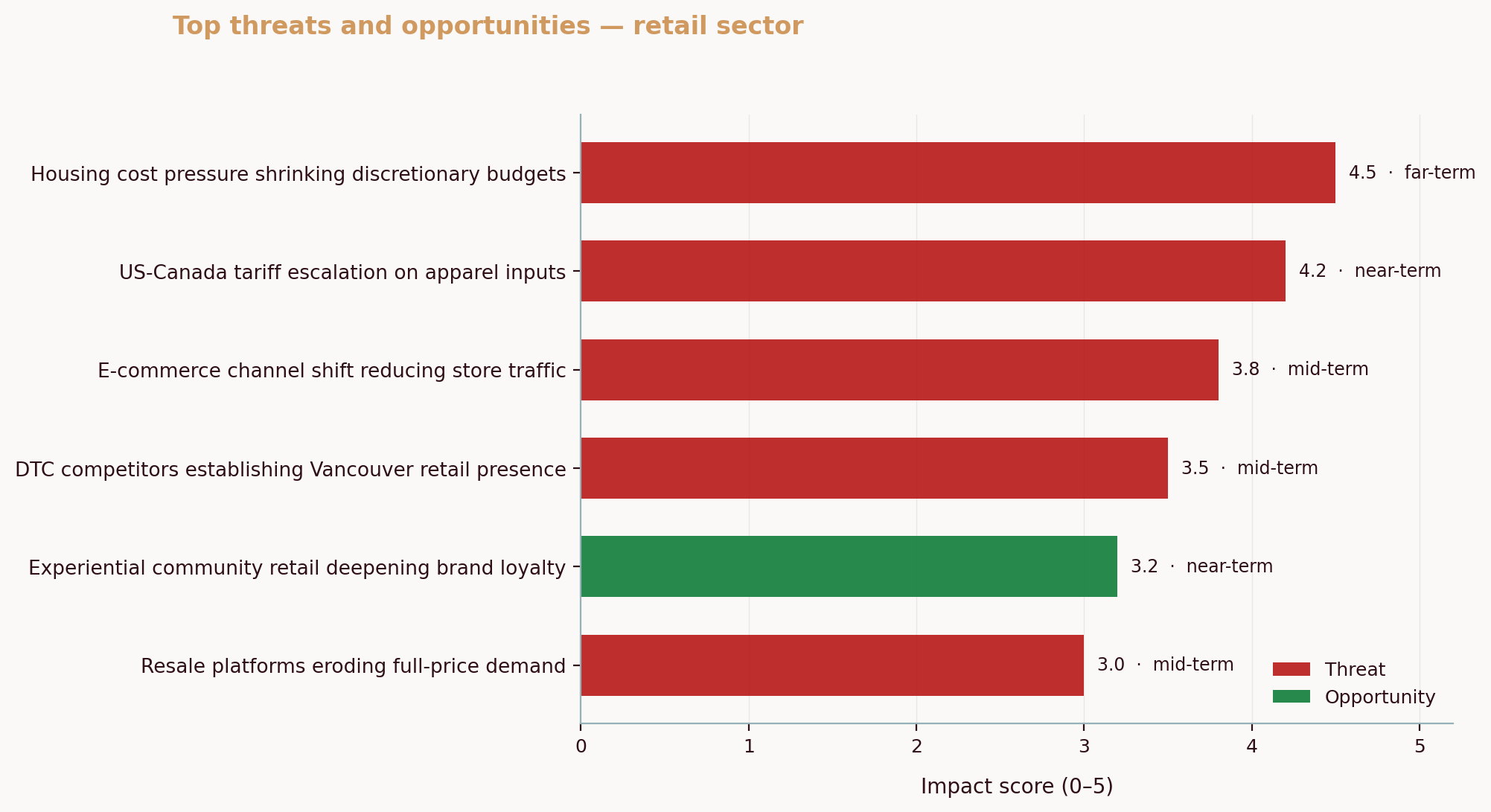
What does this mean for you? Goals should live where customers make decisions. If shoppers are comparing you to new entrants from abroad or to direct‑to‑consumer upstarts—as a Vancouver athletic wear retailer learned when share of local social mentions fell under pressure from brands like JD Sports and Decathlon—write a goal about reclaiming conversation share, not just “posting more often.”
Write goals that are in your control. Revenue is a lagging result. Number of qualified quotes sent, follow‑ups completed, and demos delivered are levers you can actually pull. Plan your goals to focus your calendar on those levers. Good business goals are specific, realistic, and tied to actions you can repeat weekly.
Before and after helps:
- Before: “Get more catering bookings.”
- After: “Book 12 corporate lunches in July at an average order value of $450 by calling 10 office managers a day and running a Wednesday tasting, tracked weekly.”
A short check-in question keeps you honest: If a stranger looked only at your actions and your tracker, could they tell what you are trying to achieve and by when?
💡 Pro Tip
Always write your goals down where the team can see them. Visibility raises commitment, and it reduces the quiet drift back to old habits.
Curious how goals intersect with competition? Mapping real rivals often uncovers better targets. If that would help, see these practical guides: identify your real competitors, run a competitor SWOT, and track competitor pricing and marketing.
3) A Simple Goal-Setting Template to Follow
Use this one-page template. It is concise enough to print and stick by your desk, and complete enough to guide action. Treat it as a lightweight goal setting framework you can revisit weekly.
- What: Name the specific outcome in plain language. “Add 10 new recurring customers” says far more than “increase sales.”
- How much: Put a number on it. Volume, rate, percentage, dollars, hours saved. No number, no goal.
- By when: Give it a calendar date, not “Q3.” Dates anchor commitments.
- How: List two to four actions you fully control. These are your weekly levers.
- How I will track it: Name the indicators and the source of truth. Keep it to one screen. You are more likely to use a simple tracker every Friday than a 12‑tab workbook you dread opening. For basic KPI tracking and progress measurement, a shared Google Sheets tab works well. If your team prefers boards, Trello or Asana can host a compact list of inputs and results.
Here is a filled example for a service firm in Halifax:
- What: Book 30 discovery calls with qualified prospects.
- How much: 30 booked calls.
- By when: August 31, 2026.
- How: Email five existing clients each Monday asking for two introductions; publish two “alternatives to” comparison posts; send 20 targeted LinkedIn messages on Tuesday and Thursday mornings; schedule a live webinar on July 24.
- How I will track it: Weekly counts for emails sent, intros received, comparison post views, LinkedIn replies, webinar registrations, and discovery calls booked. A simple chart shows cumulative booked calls versus the 30‑call target line. You can keep this chart in Google Sheets, or mirror it in Trello or Asana for easy team visibility.
Why this structure works: it balances the outcome with the inputs you can repeat. It is also easy to review, which matters because owners are pressed for time. That is not just opinion. Cost and labour constraints continue to top Canadian SMB concerns, so time spent on planning must translate into action quickly. A short, standard template keeps you from reinventing the wheel and lowers the friction to do the next review. CFIB cost pressure brief, Q2 2024. (cfib-fcei.ca)
Want help scoping the “How” for competitive moves while you set goals? Benchmark who you are really up against, then point a goal at the gap: identify competitors fast and extract marketing moves without paid tools.
With the template defined, the next hurdle is knowing which numbers to watch week by week so you can course‑correct in time.
4) Understanding Leading and Lagging Indicators for SMBs
Leading indicators are the actions you control that predict results. Lagging indicators are the results that confirm whether your actions worked. You need both, but you manage the leading ones daily and read the lagging ones to learn and reset. In other words, you balance performance metrics you can influence right now with outcomes that confirm growth.
Think of a hockey game. Shots on goal and time in the offensive zone are leading indicators of a win. The final score is a lagging indicator. You cannot command the score directly. You can work the forecheck.
Examples help pin this down:
- Sales: Leading indicators include qualified demos booked per week, proposals sent, or follow‑ups completed within 48 hours. Lagging indicators include revenue, average deal size, and close rate.
- Marketing: Leading includes new comparison pages published, social mentions that match your brand keywords, and outreach to partners. Lagging includes organic traffic, newsletter signups, and share of voice in local conversations.
- Operations: Leading includes on‑time supplier confirmations and preventive maintenance tasks completed. Lagging includes on‑time delivery percentage, defect rate, and cost of goods sold.
Here is a quick comparison you can share with your team.
| Indicator Type | Definition | Examples | Importance |
|---|---|---|---|
| Leading | Inputs and activities you control that predict results | Calls made, demos booked, referral asks, new pages published, supplier confirmations completed | Lets you adjust mid‑flight when you are behind, because you can do more of them next week |
| Lagging | Outcomes that prove whether the strategy worked | Revenue, profit, average order value, conversion rate, customer retention, on‑time delivery | Validates the strategy and informs next quarter’s targets, but cannot be changed after the fact |
The trap to avoid is tracking only lagging results. If revenue dips, you learn it when it is too late to fix the week that just passed. Another trap is drowning in vanity metrics that look good but do not cause results. The aim is a short ladder of indicators where each leading rung logically connects to a lagging outcome you care about. This is the measurement discipline many high performers adopt: keep the score visible, link it to the behaviours you want, and shorten the feedback loop so you can pivot quickly. McKinsey on performance management and leading indicators. (mckinsey.com)
Evidence from Canadian intelligence work also shows why indicator choice must match your actual market conditions. In March 2026, the aforementioned Calgary metal fabricator competed in a city where nearly every rival had glowing reviews, so “review count” was a poor lagging metric to chase. Content visibility, localized supply readiness, and proof of tech adoption were better leading bets for winning bids. Meanwhile, the Saskatoon bar’s indicators needed to reflect value perception, food safety signals, and in‑venue experience because that is where diners were deciding. You can see how the right leading signals change by industry and city.
If marketing share of voice is slipping in your retail niche, like the Vancouver example with pressure from JD Sports and Decathlon across channels, consider leading inputs such as “influencer collaborations launched” and “store events hosted,” tied to lagging results like “share of local social mentions” and “foot traffic week over week.” When the leading list reads like a weekly calendar, you know you chose well. This is also how you know if your business is growing, the lagging indicators trend upward month over month while the leading activities stay consistently above plan.
Still deciding which KPIs to cut or keep? Use a competitive lens while you choose. These walkthroughs can help: compare competitors with a simple SWOT and watch rivals’ pricing and promos without paid tools.
5) Establishing a Weekly Tracking Routine for Realistic Business Goals
Great goals die in the gap between intention and habit. The antidote is a five‑minute weekly routine you can run on a Friday afternoon or a Monday morning, even during your busiest season. If you are wondering how to track business goals, start here and keep it simple.
Here is the routine:
- Open your one‑page tracker. Update the numbers for your leading indicators first. Did you send the proposals, publish the page, make the calls, run the tasting, or schedule the demos? Enter the totals. Keep it to three to five inputs. If it helps adoption, keep the tracker in Google Sheets, or mirror it in Trello or Asana for quick team check-ins.
- Update lagging results. Revenue, signups, booked jobs, or defect rate. No commentary yet. Just the facts.
- Look for one pattern. Up, down, or flat against the target line. If you are behind, move to actions.
- Adjust actions, not the goal. Increase the controllable inputs for the next seven days. If “follow‑ups within 48 hours” correlates with more wins, block calendar time for it. If a tactic is not showing any signal after two weeks, swap in another action, but keep the same outcome and date unless the market has changed materially.
- Document a one‑sentence decision. “Next week, we will run two comparison demos per day and call five lapsed customers.” That sentence is your team’s permission to focus.
Why five minutes? Owners in Canada are juggling cost control and staffing. A light routine is far more likely to happen consistently, which is what predicts progress. There is also a morale effect: the act of closing the loop weekly builds confidence that your plan is alive, not a binder on a shelf. This is practical progress measurement as much as it is culture. CFIB workforce challenges overview. (cfib-fcei.ca)
Want a quick way to sharpen the routine? Tie one of your leading indicators to a competitive signal you already watch. For example, if a rival rolls out a seasonal discount you tracked last year, increase “existing‑customer outreach calls” by 50% for two weeks and measure whether retention holds. Aligning actions to real competitor behaviour is how goals stay relevant. The guides on identifying the true competitor set and lightweight pricing surveillance give you step‑by‑step ideas you can run without new software.
Do this today: choose one outcome for the next 30 days, pick two leading inputs, add a target date, and paste your mini‑tracker into your calendar invite for a weekly five‑minute review. Momentum starts on paper, then moves to your calendar. Set realistic business goals that match your current capacity, then increase the dose as your team finds its rhythm.
Common Questions About Setting Business Goals
What is the best way to prioritize business goals?
Start with impact and feasibility. List potential goals, then score each on three dimensions: revenue or margin impact in the next quarter, strategic fit with where you want to win, and ease of execution given your current capacity. Rank by the combined score. If two goals tie, choose the one with clearer leading indicators you can drive next week. In a cost‑pressured environment, bias toward goals that improve cash conversion, retention, or repeatable lead generation. If prioritization depends on who you are up against, build a quick view of each rival’s focus and pick the gap you can exploit. A simple competitor SWOT keeps you honest about where you can win first. See this walkthrough: competitor SWOT for small business.
How often should I review my business goals?
Review weekly for behaviours and monthly for results. Weekly, look only at leading inputs and course‑correct. Monthly, compare your lagging outcomes to target, then adjust next month’s actions. A quarterly reset keeps you from carrying stale objectives. This cadence fits Canada’s current uncertainty, where many businesses report difficulty forecasting and are cautious about hard‑to‑reverse moves. Shorter feedback loops reduce the cost of being wrong. Bank of Canada Business Outlook Survey, Q2 2025. (bankofcanada.ca)
Can I have too many goals at once?
Yes. Too many goals scatter attention and dilute effort. Most small firms get farther with two or three targets per quarter, each with two to four leading actions you can do weekly. The rest goes into a parking lot for the next cycle. Think of attention as a budget. Overspend it, and the most important targets starve.
What if I do not meet my goals?
Treat it like a post‑game review. Ask three questions. Did we do the inputs at the dose we planned? Were our leading indicators actually linked to the result we wanted? Did something material change in the market that should reshape the “how” for next month? When cost spikes or new competition shift the field, you do not lower the bar. You change the playbook. Owners across Canada continue to cite cost as a top challenge, which means your plan should adapt quickly while the outcome stays ambitious. CFIB cost pressure brief, Q2 2024. (cfib-fcei.ca)
At this stage, you have a framework, examples, and a five‑minute routine that fits on a single page. You also have a next move: pick one goal, choose the inputs, schedule your weekly check, and start collecting proof.
A final note for owners who want competitive context while they set targets: Aurevon’s Ecosystem Dynamics Report condenses local competitor moves, channel momentum, and market signals into a format you can translate into clear goals and weekly inputs. If that would help, you can learn more and see how it aligns to your planning cadence at aurevon.ca.
Mitchell Ozmun
SMB Researcher, Business Analyst - Saskatchewan Born and Raised