How to Learn from Competitor Reviews and Elevate Your Brand in 2026
Ninety seconds into your morning, you’re already drowning. New orders. Two staff call in sick. A customer DM asks about a refund. Then you spot it: a glowing five-star review on a rival’s page racking up likes while your latest post sits quiet. That gap costs you leads. Here’s the quiet fix hiding in plain sight: learn from competitor reviews to hear what real buyers praise, what they can’t stand, what they wish someone would finally do better, and how their customer expectations are shifting.
Only 42% of consumers now say they trust online reviews as much as personal recommendations, yet that is still a massive slice of purchase influence you can mine directly for strategy if you read reviews with intent. The upside is simple: 5-star comments define the standard you must meet, 1-star rants map solvable pain, and middling 3-star notes capture honest trade-offs that buyers accept or reject. The prize is clarity you can act on without paying for focus groups or guesswork. See how that works?
Related: AI Tools for Small Business - 7 Ways Small Business Can Use AI Today — Philip VanDusen
The Value of Competitor Reviews
Competitor reviews are the cheapest market research you will ever get because customers are doing the hard work for you. They publish, in plain language, what they value, what broke, and what they expected but didn’t receive. You are reading the market’s unfiltered negotiation with your category. Unlike classic research that often summarizes findings at a distance, reviews on platforms like Google Reviews, Yelp, HomeStars, and TripAdvisor are direct evidence from the front line, raw stories, specific contexts, and words you can reuse in your own copy. Treat this stream like a weekly briefing and you will catch small signals before they become expensive competitive gaps. In other words, you are doing market research from reviews without commissioning a study.
Two realities make this especially urgent in 2026. First, reviews still move demand, even as trust grows more nuanced. BrightLocal’s latest Local Consumer Review Survey shows that 42% of consumers trust reviews as much as personal recommendations, which is lower than in 2020 but still decisive for many shoppers in the moment they’re choosing who to contact first. That means your rivals’ reviews are shaping buyer shortlists, often before your ads load. BrightLocal 2025. (brightlocal.com)
Second, Canadian SMBs are facing heavy cost pressure, so “free” intelligence sources matter. CFIB’s ongoing Business Barometer reports show taxes, regulation, and wages among the top input cost constraints for small firms, which squeezes research budgets and attention. Using reviews as structured signals lets you keep learning while the budget stays tight. CFIB Business Barometer media update. (cfib-fcei.ca)
There is a catch, skepticism. Canadians are rightly wary of online misinformation. Statistics Canada reports that a majority express high concern about online misinformation, which is a good reminder to read critically and look for patterns across many reviews, not one loud opinion. Statistics Canada, Concerns with misinformation online, 2023. (www150.statcan.gc.ca)
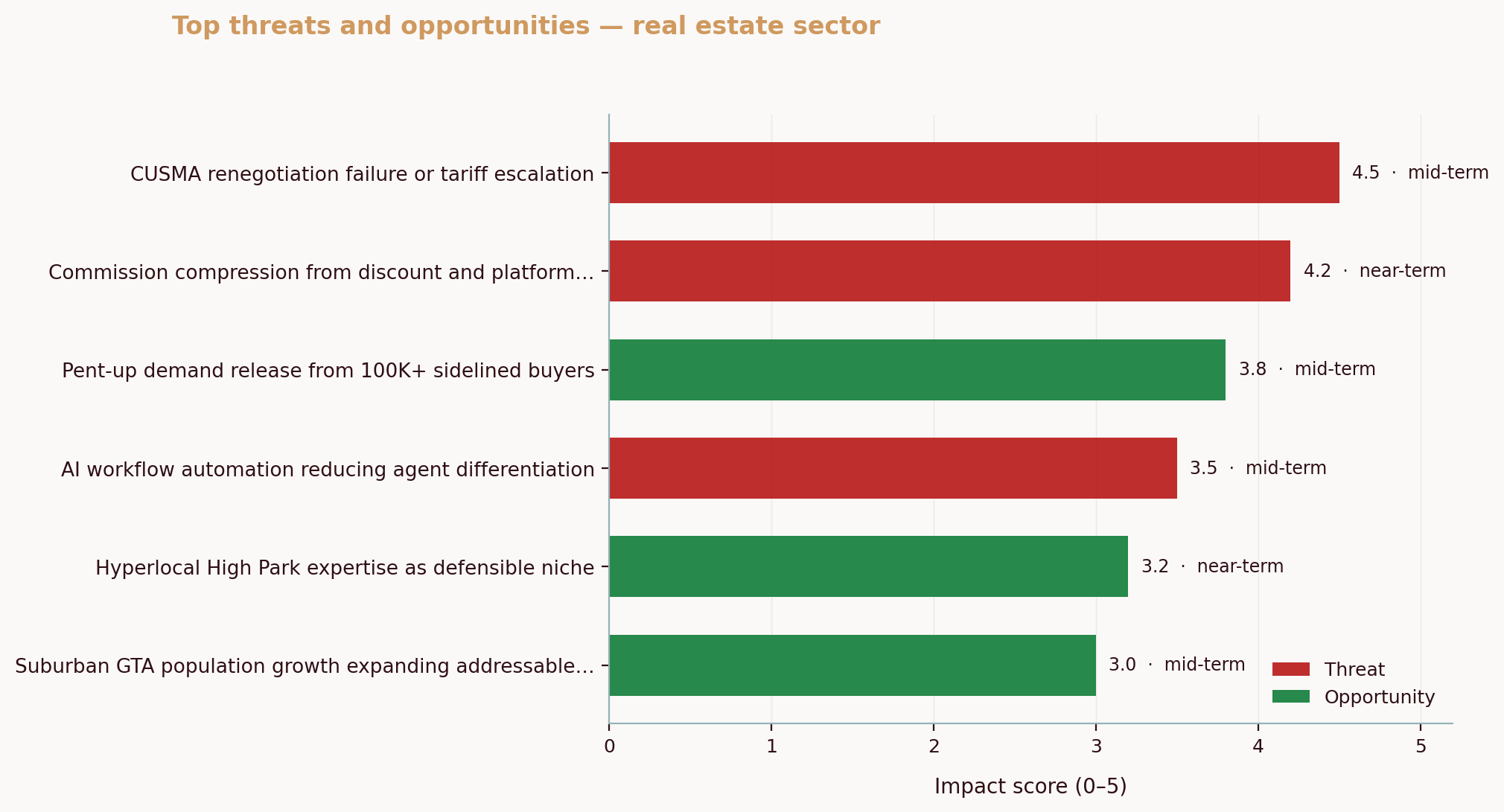
What does this mean for you? Reviews are a map of demand, not a scoreboard. Treat them as field notes to improve three things: your promise (what you say), your practice (what you do), and your proof (what customers repeat). And because the best insights are market-specific, consider how this plays out in real Canadian contexts. In a Toronto real estate brokerage analysis via the Aurevon Intelligence Service (March 2026), we found a stark two-speed split between softening condo sentiment and resilient low-rise demand, with over 100,000 sidelined buyers building pent-up demand; brokerages that emphasize transparency and hyper-local data are capturing more trust. Review themes about “clear price breakdowns” and “neighbourhood expertise” lined up with that macro split, so the winning move was to show local data in plain language instead of generic optimism. (Source: Aurevon Intelligence Service analysis, Canadian real estate SMB, 2026-03.)
🔑 Key Takeaway
Competitor reviews are buyer transcripts you didn’t have to pay to collect. Read them for what to copy, what to fix, and where to stand apart, then turn those findings into specific promises you can keep.
With the “why” clear, the next step is a reading method that turns noise into signals.
The 3-Tier Reading Strategy
A simple and powerful way to extract value is to group feedback by rating tier. Think of it like tuning a radio. Each band broadcasts a different kind of truth, and you need all three to hear the full song.
1-star reviews: pure pain mapping
These are spikes of friction. Customers document the exact moment the experience failed, the unmanned phone line at 4:55 p.m., the refund loop nobody explained, the “two weeks late” shipment that arrived without an apology. Your task is to translate each complaint into a fix you could own. If multiple 1-stars mention “no call back,” you have a response-time problem. If they highlight “nice staff, but the part broke in a week,” you have a durability or supplier QA issue. As an analogy, 1-stars are like smoke alarms in different rooms. One chirp might be a battery. Three at once means the wiring needs attention. This is also where you uncover competitor weaknesses you can avoid and openly solve.
3-star reviews: the honest middle ground
Three-star comments are usually balanced and specific, which makes them gold. Customers say, “fast delivery, but packaging was flimsy,” or “knowledgeable team, scheduling tricky.” These are trade-offs buyers will accept up to a point. They reveal how your market prioritizes attributes, speed versus polish, expertise versus convenience, price versus support. If you harvest the verbs and nouns here, you get copy that sounds like your buyers, not your boardroom.
5-star reviews: the standard to match
These define table stakes. They show what “great” looks like in your space. Notice what gets praised repeatedly, “called me back same day,” “clean install,” “clear quote,” “kept me updated.” Those aren’t extras, they are the minimum your next customer expects. They also give you phrasing you can mirror without copying; if customers love “no surprises,” then “no-surprise pricing” belongs in your messaging.
How to analyze each tier without drowning
- Sample size and time window. Pull the last 20 to 30 reviews per competitor from the past six to twelve months so you’re matching current operations and pricing, not pandemic-era exceptions.
- Code by theme, not emotion. Tag each review snippet with a short label, “response time,” “quote clarity,” “post-sale support,” “durability,” “pricing fairness,” “staff knowledge,” “return experience,” “store layout,” “website UX.”
- Separate fixable operations from market positioning. “Rude staff” is operations. “Too expensive” might be positioning unless your costs are truly out of line.
- Watch replies. Responding to reviews is not just polite, it can improve later ratings. Research in Harvard Business Review shows that when managers reply thoughtfully, subsequent ratings tend to rise. HBR: Study: Replying to Customer Reviews Results in Better Ratings. (hbr.org)
Here’s a “see it in action” moment. Imagine a Halifax accounting firm studying six months of competitor reviews. The 1-stars cite “slow call-backs” and “unclear fees.” The 3-stars praise “smart advice” but mention “confusing onboarding portal.” The 5-stars celebrate “same-day answers” and “fee breakdowns.” The obvious move is a speed promise, priced in hours, and a plain-English fees page with two examples. Short punch, response time wins.
Ready to put this into practice? Let’s structure the work.
Practical Exercise to Analyze Competitor Reviews
You can do this in one focused afternoon. It’s like sending three secret shoppers at once, then comparing their notes.
Step 1: Pick your set
Choose three competitors who sell the same or substitutable offers to your best-fit customer. If you’re unsure who those “real” competitors are, tighten your list with this field guide, how to identify your real competitors. Aim for at least two in your city and, if relevant, one strong digital-only option to capture modern buyer expectations.
Step 2: Collect the source material
For each competitor, read the last 20 public reviews on their primary platforms (Google Reviews, Facebook, Yelp, HomeStars, TripAdvisor, industry directories, marketplaces). Don’t cherry-pick. Copy short excerpts that show specifics, not just star counts. If a review stream is thin, expand the time window or add an adjacent competitor who serves a similar buyer profile.
Step 3: Sort into a simple grid
Create a one-page grid with three columns: what customers love, what they hate, and what they wish was different. Keep each item to a short phrase so patterns pop. This is your working document for decisions next week, not an academic report.
Step 4: Add two more passes
- Pass A: Tag each row with a theme label (response time, quote clarity, delivery accuracy, etc.).
- Pass B: Mark whether the issue is an operations fix (we control it), positioning shift (we choose to stand here), or messaging change (we already do this, we just don’t say it clearly).
Step 5: Sanity-check sentiment
Reviews can be biased, and Canadians say they worry about misinformation online. Use volume and cross-platform checks to avoid chasing anomalies. Statistics Canada. (www150.statcan.gc.ca)
A simple way to learn from competitor reviews is to work directly inside a structured worksheet. Use the table below as your template.
| Competitor Name | What Customers Love | What Customers Hate | What Customers Wish Was Different |
|---|---|---|---|
| Competitor A | “Called back same day”; “Clear quote”; “No mess after install” | “Late once, no update” | “Weekend service” |
| Competitor B | “Friendly staff”; “Good value for money” | “Confusing fees”; “Hard to reach during lunch hours” | “Online booking” |
| Competitor C | “On-time delivery”; “Quality parts” | “Rude on phone (one staff)”; “Return process slow” | “Faster refunds”; “Live chat” |
Step 6: Pull the first three moves
From your grid, choose one operations fix you can ship this month (for example, “48-hour install follow-up call”), one messaging upgrade (for example, “No-surprise, line‑item quotes”), and one differentiator to test (for example, “text updates every milestone”). This is practical, competitive review analysis that turns notes into action.
If you want a deeper framework to turn these notes into positioning, pair the grid with a competitor SWOT template so strengths and weaknesses in reviews roll into opportunities and threats on paper. And as price concerns appear in comments, keep an eye on how rivals adjust offers and promos with this guide to tracking competitor pricing and marketing.
With a grid in hand, your next skill is pattern recognition.
Identifying Patterns and Opportunities
Patterns are where strategies are born. Your aim is to see beyond a single rival and spot the “industry commons,” the issues everyone trips over and the promises everyone repeats. That shows you where buyers feel let down and which advantages are table stakes.
Start by scoring frequency. If two or more competitors get dinged for “slow response” and none set a time-bound promise, you’ve found a wedge. Promise what others merely imply, “We reply within one hour, 9–5, Mon–Sat.” Keep that promise, then show the proof in live website copy and post-purchase automation. The point is to turn a review complaint into a visible commitment.
Next, separate solvable frictions from market structure. In a Calgary custom metal fabrication analysis (March 2026), review ratings across local shops were near-perfect, so differentiation no longer lived in “quality.” The competitive battleground shifted to content visibility, supply chain localization, and demoing tech adoption to win trust before the quote. That meant winning on who shows up first with proof, not who merely says “we do great work.” (Source: Aurevon Intelligence Service analysis, Canadian manufacturing SMB, 2026-03.) What competitor reviews tell you in saturated markets is that perfection in ratings moves the fight to speed, visibility, and perceived modernity.
For retail, look for pressure from outside the usual suspects. In a Vancouver athletic-wear review and social audit from March 2026, one local brand’s dominance (40% of social mentions) was eroding as JD Sports and Decathlon opened on Robson and in Metrotown, while Vuori and Alo Yoga chipped away through influencers and price-value narratives. If you read comments across those rivals, you see precise friction points, inconsistent sizing info online, slow returns, and “premium price without premium service.” That’s a checklist for your storefront hours, fit guides, and returns policy. (Source: Aurevon Intelligence Service analysis, Canadian retail SMB, 2026-03.)
Two more pattern lenses sharpen the view:
- Response dynamics. Reviews don’t just describe experiences, they react to your reactions. Academic work summarized in Harvard Business Review found that when firms respond constructively to reviews, future ratings improve. That gives you an immediate operational lever when “slow response” is a multi-competitor theme. HBR. (hbr.org)
- Feature-weighting. McKinsey’s analyses of star ratings show that mining reviews to identify the two or three attributes driving dissatisfaction can lift sales materially once fixed. Reviews are not just a sentiment feed, they are an experiment log telling you which changes will move revenue. McKinsey: Use star ratings to inform redesigns. (mckinsey.com)
One counterintuitive watch-out, glossy 5-star walls can hide a soft middle. Moderately positive reviews are sometimes more persuasive than raves because they feel thoughtful. That is exactly why the 3-star tier in your grid deserves careful study. Harvard Business Review: Glowing Reviews Aren’t Always the Most Persuasive. (hbr.org)
An analogy helps, imagine three salespeople pitching the same client. The angry one (1-star) tells you what to stop. The measured one (3-star) tells you what to tune. The cheerleader (5-star) tells you the baseline you must keep. You need all three if you want the deal.
So the risk is real, miss the pattern, miss the market. What can you do with it tomorrow?
Turning Insights into Actionable Strategies
Your goal is to translate the grid into moves customers can feel. Work in three lanes that compound each other.
Messaging
Rewrite your homepage and top service pages in customer language lifted directly from recurring 5-star and 3-star phrases. If buyers keep praising “no-surprise invoices,” make “No‑surprise, line‑item quotes” a headline, then back it with a sample invoice screenshot. If “clear updates” wins love, add a simple “We text you at these three milestones” explainer. Small copy choices shift perception fast.
Operations
Solve the shared pain points your competitors haven’t. If response-time complaints are common across rivals, publish a time-bound response commitment and wire it into your CRM with alerts. HBR’s finding that real replies lift later ratings gives you the confidence to invest here because it compounds your reputation over time. HBR. (hbr.org)
Positioning
Plant a flag where patterns point. If reviews show that buyers reward local proof and price clarity (and macro context, like rate shifts or housing outlooks, is top of mind), speak to it. CMHC’s 2026 Housing Market Outlook highlights region-by-region differences and ongoing uncertainty that consumers feel at street level. Clear local guidance and transparent steps will stand out when buyers are anxious. CMHC 2026 Housing Market Outlook. (cmhc-schl.gc.ca)
Before/after to make this concrete:
- Before: “Fast shipping. Great service.”
- After: “We answer within one hour on business days, text progress at three milestones, and send a line‑item quote before work begins.” See the difference?
Do this today
Pick three competitors. Read their last 20 reviews. Fill the grid. Choose one operations fix, one messaging change, and one differentiator to pilot for 30 days. If pricing or promo chatter keeps popping up, start a weekly watch using this low-cost approach to track competitor pricing and marketing. And when you want to fold your findings into a strategic view, drop them into this competitor SWOT template so actions line up with goals.
Common Questions About Learning from Competitor Reviews
Short answers to the big ones, yes, you should read competitor reviews, because they are low-cost market research from reviews. They help you learn from your competitors by revealing recurring frictions, show you where competitor weaknesses are visible, and highlight what reviews can tell you about the market, especially emerging customer expectations.
How do I choose which competitors to analyze?
Pick firms that serve the same need for the same buyer you target. If you are a local service business, include at least two nearby players and one online-first competitor with meaningful volume, because digital experiences shape expectations for everyone. If you’re unsure who truly competes with you, use this quick guide to identify your real competitors so you don’t waste time studying the wrong benchmark.
What if I don’t find any relevant reviews?
Broaden the net to adjacent markets or similar buyer profiles. For example, a boutique landscaping company could scan reviews of lawn-care subscription services to learn how homeowners talk about scheduling, debris cleanup, or payment plans. If volume is low on one platform, check others or extend your time window. The aim is to collect enough signals to spot patterns, not to build a perfect dataset.
How often should I analyze competitor reviews?
Quarterly is a solid baseline. It’s frequent enough to catch shifts in expectations and seasonal issues, and it aligns with most planning cycles. If you operate in a high‑velocity category (food, apparel, consumer electronics), review monthly. Tie your sprints to specific questions, “Are response times still a complaint?” “Did the new ‘no‑surprise quote’ line show up in customer language?” When the market gets noisy, more listening beats more guessing. Consistent reviews work functions as ongoing competitive review analysis.
Can I use competitor reviews for my marketing strategy?
Absolutely, and do it with care. Use the exact words customers repeat to shape your headlines and FAQs, then back them with proof. If buyers crave local expertise, publish a comparison checklist that explains how your process prevents the common frustrations you saw across rivals’ 1-star reviews. If they praise “clean installs” or “thoughtful packaging,” show your process in photos and short clips. And remember the compounding effect; thoughtful replies to all reviews signal dependability to future buyers and can lift future ratings over time. HBR evidence. (hbr.org)
If you want a structured way to turn review patterns into market moves without hiring consultants, consider the Ecosystem Dynamics Report. It distills competitive signals, demand shifts, and messaging opportunities into a one‑sitting brief you can act on, with examples adapted to Canadian SMB realities. Learn more at https://aurevon.ca/products/ecosystem-dynamics-report/.
Mitchell Ozmun
SMB Researcher, Business Analyst - Saskatchewan Born and Raised