5 Steps to Effective Competitive Analysis for Small Business
Customers stop calling. Ads get pricier. Margins thin. Competitive blind spots do that. Nearly four in ten Canadian microbusinesses don’t make it to year five, and many of those closures trace back to basic misreads of demand, pricing, and positioning that a disciplined review of rivals could have flagged early. That is why competitive analysis for small business is not a “nice to have,” it is the difference between guessing and choosing where you can win. The goal is simple: see the field clearly, pick your battles, and convert insight into moves that pay.
Related: How to Conduct Market Research for Your Business Idea — Young Entrepreneurs Forum
Understanding Competitive Analysis
Competitive analysis is the structured practice of mapping your market, profiling direct and indirect rivals, and benchmarking their offers, pricing, channels, and traction. Think of it as a regular health check for your strategy. It tells you where a competitor is strong, where they are slow, and where the market is underserved. The payoffs are practical, sharper pricing, tighter messaging, smarter channel choices, and fewer wasted bets.
Canadian data underscores the stakes. For businesses that started with 1–4 employees, only 62.5% were still operating at year five, with survival improving as initial size increases. That makes methodical market scanning a rational investment, not overhead. The source is dry, but the lesson is loud, attrition is common, and information asymmetry worsens it. See the numbers in Innovation, Science and Economic Development Canada’s Key Small Business Statistics. Key Small Business Statistics 2024. Statistics Canada and BDC also publish datasets and guides that sharpen context for local demand, sector dynamics, and financing conditions, which helps you translate findings into a competitive advantage small business owners can defend.
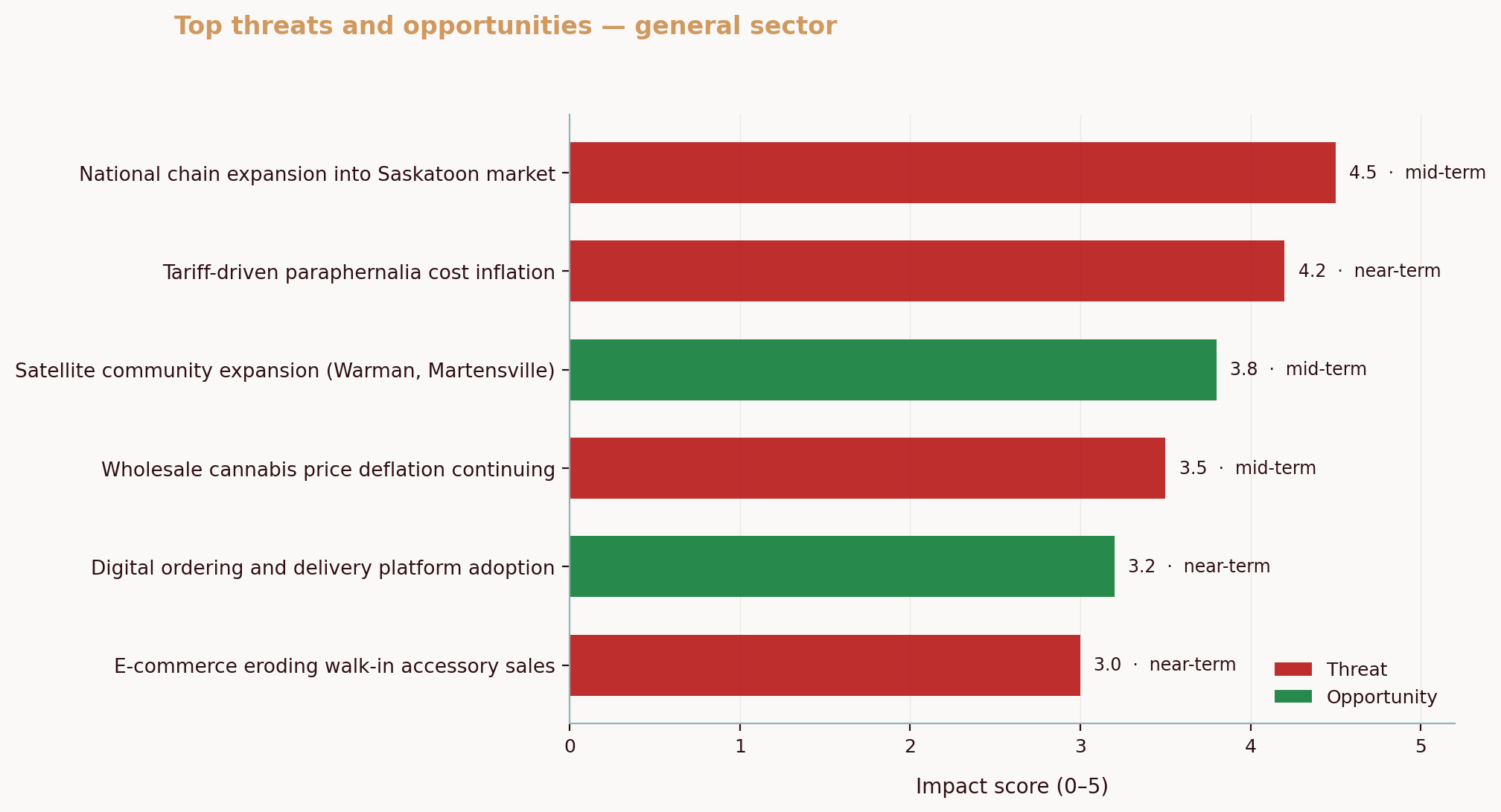
What does this look like on the ground? In our proprietary reviews of Canadian SMB markets, early signals often appear in trust and attention metrics before they show up in sales. In Saskatoon’s cannabis retail corridor, the basis of competition shifted from stock availability to delivery speed and premium curation, with Google review volume emerging as the key trust separator between leaders and laggards (Aurevon Intelligence Service analysis, Canadian general SMB, March 2026). In Vancouver’s crowded dental sector, clinics surpassing a high threshold of Google reviews and consistently posting cosmetic before-and-after content captured disproportionate mindshare and bookings (Aurevon Intelligence Service analysis, Canadian healthcare SMB, March 2026). Translation, attention is the first market share you win.
Competitive analysis fits inside strategy as the “outside-in” half. Strategy is choice under constraint. You choose where to play, how to win, and what not to do. Without a current picture of competitors’ moves and customers’ alternatives, those choices drift toward wishful thinking. A useful analogy, skipping competitive analysis is like sending two salespeople to pitch the same client without comparing notes. You talk past what the buyer already heard, and you lose the room.
So the risk is real. What can you do about it? Start by finding the right set of rivals.
How to Identify Your Real Competitors (Not Who You Think They Are)
Identifying Competitors
Direct competitors solve the same job for the same customer with similar offers. Indirect competitors solve the same job with a different approach, or they target your customer’s budget from an adjacent category. A coworking space competes directly with other coworking providers and indirectly with long-term sublets or upgraded home-office setups.
A fast way to surface both lists is to reverse-engineer customer behavior. Where do they search? What alternatives do they price-check? Which reviews do they read? Map keywords from a buyer’s query (“emergency plumber Kitsilano” or “implant dentist near me”) and capture who appears in Google’s map pack and top organic slots. Then scan marketplace listings, local directories, and community groups. For service areas, watch who runs paid local ads on the same terms you value.
To make the first pass efficient, use a simple four-bucket worksheet: product scope, geography, price tier, and channel. A rival overlapping you in three of four buckets is a prime comparator. Someone with one overlap may be an indirect threat worth monitoring if they are gaining traction.
If you prefer a stepwise approach to how to identify business competitors, this field guide lays out a clean discovery method you can run this week. SMB owner’s guide to identifying competitors. For a deeper dive on running a competitor SWOT analysis small business leaders can act on, use this template-driven walkthrough. Competitor SWOT templates for SMBs.
With your list in hand, the next question is simple, what do you collect and how?
Methods of Conducting Competitive Analysis
There are two streams of evidence to combine. Qualitative signals show intent, positioning, and narrative. Quantitative signals show traction, pricing, and repeatable behavior.
Qualitative methods include message mapping across sites and ads, offer teardowns (features, guarantees, onboarding steps), and channel scanning for content cadence and themes. Quantitative methods include pricing captures, review volumes and recency, ad impression shares, and estimated traffic.
Here’s how to gather the core inputs without overkill:
- Website and funnel, record hero promises, social proof, and checkout or booking friction.
- Pricing, log list prices, promo frequency, and price fences (student, senior, bundle). If you’re exploring how to track competitor pricing, set a recurring reminder to screenshot or export price pages weekly and to capture limited-time codes during peak seasons. A short primer is here. Track competitor pricing and marketing on a budget.
- Reviews, track counts, recency, and owner responses. BrightLocal’s long-running survey shows that review volume and how recently reviews were posted materially affect trust and choice. BrightLocal Local Consumer Review Survey.
- Ads and traffic, note search ad presence on priority terms and directional traffic estimates from public tools.
To monitor your competitors online, set Google Alerts for brand names and product terms, watch Google Maps Q&A and review replies weekly, track site changes with VisualPing or Distill.io, and use Similarweb or Semrush snapshots to flag shifts in top pages and paid search activity. For Canadian context, BDC how-to guides and Statistics Canada tables can help validate whether trends you see are local blips or part of a broader pattern.
To keep the tooling lean, start with a blend of free and affordable platforms.
Tool Name | Type | Features | Pricing
- -- | --- | --- | ---
Google Business Profiles, Maps | Local presence | Map pack rivals, reviews, Q&A | Free
Wayback Machine | Web archive | See past pricing and offers | Free
BuiltWith | Tech lookup | Tech stacks, scripts, CDNs | Free tier, paid plans
VisualPing / Distill.io | Change monitoring | Alerts on price page edits | Free tier, paid plans
Similarweb | Web analytics estimate | Traffic, top pages, referrers | Free snapshots, paid suites
Semrush / Ahrefs | SEO/ads intel | Keywords, backlinks, PLA ads | Paid, SMB plans available
Price2Spy | Price tracking | Auto-scan catalogs, alerts | Paid, per-URL tiers
💡 Pro Tip
Consider using a combination of tools to get a comprehensive view of your competitors.
One practical anchor, pricing. Many SMBs change price only when costs spike, then wonder why volume slides. Research on structured pricing management shows that disciplined programs often deliver margin lifts in the mid single digits when executed well. McKinsey reports 4–8 percentage point improvements in return on sales from sustained pricing improvements with governance and data. McKinsey: The hidden power of pricing. See how that reframes “matching the market” into a repeatable advantage?
When scanning reviews, don’t just read stars. In markets we assessed this spring, the clinics and retailers that won attention paired review volume with timely owner responses and proof-heavy content. BrightLocal’s data echoes that recency and volume are trust drivers, which aligns with our healthcare and cannabis findings noted earlier. BrightLocal Local Consumer Review Survey.
With a workable dataset collected, the next step is turning noise into choices.
How to Do a Competitor SWOT Analysis for Your Small Business
Interpreting and Utilizing Data
A simple way to synthesize signals is to layer three lenses: a competitor SWOT, a value curve, and a jobs-to-be-done check. Among competitor analysis frameworks, these three cover positioning, customer value, and practical tradeoffs. The SWOT organizes facts by each rival’s strengths, weaknesses, opportunities, and threats. The value curve (popularized by Blue Ocean Strategy) forces you to score offers across buyer decision factors like speed, convenience, financing, and social proof. The jobs lens asks what progress the customer is hiring the product or service to make, and whether your next move improves that progress in a way rivals do not.
Here’s how this actually works. Imagine a Toronto brokerage mapping its category in early 2026. Our proprietary review found a two-speed market, condos softening while low-rise housing stayed resilient, with a large pool of sidelined buyers seeking transparency and data-driven guidance (Aurevon Intelligence Service analysis, Canadian real estate SMB, March 2026). External market data shows rental starts outpacing condo starts in the City of Toronto, consistent with a pivot in supply and demand dynamics. CMHC Spring 2026 Housing Supply Report. The brokerage’s value curve then emphasizes hyper-local data explainers, mortgage rule translation, and neighborhood change videos, while de-emphasizing generic listing blasts. That changes things.
A quick example of a SWOT analysis for a small business, a neighborhood bakery might list Strengths (signature sourdough, loyal morning crowd), Weaknesses (limited seating, short afternoon hours), Opportunities (partnering with nearby cafés, subscription bread boxes), and Threats (grocery store bake-offs, rising flour costs). That single page clarifies which moves deserve priority.
Before/after comparisons help confirm impact:
- Before, pricing updated ad hoc, reviews unmanaged, “one-size” service offer.
- After, quarterly pricing review tied to market benchmarks, review response SLA within 48 hours, and segmented offers for premium, standard, and budget tiers.
Want a playbook for reading the numbers? We outlined how to translate findings into choices here. Interpreting competitive data for SMBs
Common Pitfalls and Next Steps for Implementation
Three mistakes recur. First, treating analysis as a one-off. Markets move. Set a quarterly cadence and a one-page update for your team. Second, over-collecting and under-deciding. If a metric does not change a choice, skip it. Third, copying without context. If a rival discounts heavily to mask churn, matching that price may erode your margin with no payback.
Avoid these traps by assigning owners to each decision area: pricing, promotion, product, and placement. Give each owner two inputs and one output. For example, “pricing owner” reviews tracked competitor list prices and promo frequency, then recommends a specific price fence or a limited-time bundle. Keep scope tight so it ships.
Do this today, schedule a 60-minute “competitor refresh” for next week. Prepare a one-page sheet listing your top five rivals, current list prices, last promo, review counts with recency, and top ad messages. Decide one move you can test inside 30 days, such as a guarantee tweak or a category-focused landing page.
If you want to go deeper on common errors and handoff checklists, use this companion. Competitive analysis pitfalls and checklists for SMBs
How to Track Competitor Pricing and Marketing Without Expensive Tools
Common Questions About Competitive Analysis for Small Business
What is the best way to start competitive analysis, and how do I find out who my competitors are?
Begin with a clear list of direct and indirect rivals, then collect only the basics: product scope, price points, review signals, and top messages. A quick competitor SWOT narrows focus to where you can respond fastest. For a structured first pass, this guide on how to identify business competitors keeps the task to a single afternoon. Identify real competitors
How often should I conduct competitive analysis?
At least once a year, with lighter refreshes each quarter if you operate in a fast-moving category like local services, e-commerce, or regulated health. Survival rates and market conditions change, so set a cadence that aligns with your pricing and budgeting cycles. ISED’s data on business survival shows how quickly trajectories diverge, which is a good reminder to review more than once. Key Small Business Statistics.
Can small businesses afford competitive analysis tools?
Yes. Start with free sources like Google Maps, Wayback Machine, and built-in social insights, then add one paid tool if it will answer a specific question. The return often comes from pricing and promo changes; structured pricing programs have documented margin lifts when run with discipline. McKinsey pricing impact.
What should I do with the data I collect?
Translate it into one move per quarter: a price test, a tighter guarantee, a focused content theme, or a channel shift. If reviews drive trust in your niche, set a response SLA and a monthly ask cadence. BrightLocal’s research shows why volume and recency matter to buyers who are comparing options. Consumer review study. Aim to strengthen one of five competitive advantages often available to small firms: cost position, differentiation, a tight niche focus, speed and operational agility, and customer intimacy backed by service reputation.
Ready to turn these steps into an always-on system? For Canadian SMBs, Aurevon’s Ecosystem Dynamics Report distills market signals, competitor shifts, and trust indicators into a single briefing you can act on. See how it works and whether it fits your next planning cycle, Ecosystem Dynamics Report.
Mitchell Ozmun
SMB Researcher, Business Analyst - Saskatchewan Born and Raised