Avoid These Common Mistakes When Responding to Negative Reviews: how to respond to negative reviews the right way
You refresh your phone. One star. Harsh words. A public jab at everything you’ve built. Your pulse spikes. Fingers hover over the keyboard. That’s the trap. The review stings, but what happens next matters more. Learn how to respond to negative reviews in a way that restores confidence for the critic, and more importantly, signals to every future customer that your business is steady, fair, and human.
Here’s the core move: acknowledge the person, address the specific issue, apologize for their experience, then move the conversation offline to solve it. Keep it short and professional. Don’t argue. Don’t blame. Don’t make excuses. People are not only judging the complaint; they’re judging how you handle pressure. That’s where trust is earned in plain sight. Treat this as part of your review response strategy and negative feedback management, not a one-off fire drill.
Related: 💥 How To Remove Negative Google Reviews (THIS WORKS!) — Whitespark
Common Mistakes in Responding to Reviews
Most owners commit one of two errors with bad reviews: silence or heat. The first is the digital equivalent of turning the sign to Closed at noon. The second is arguing in your own front window. Both do more damage than the original critique because they establish a pattern: either you don’t care or you can’t stay calm.
Ignoring reviews leaves a vacuum that readers fill with their own assumptions. In Canadian SMB surveys, most businesses now operate on at least one public-facing channel, including Google Business Profile, Yelp, and Instagram, which makes non-responses conspicuous to anyone comparing options. The absence of your voice becomes a data point: if they don’t answer now, will they answer me later? CFIB research on SME digital presence shows how visible those channels have become for small firms choosing where to show up online. Better Business Bureau profiles add another layer because readers often scan BBB pages when evaluating how a company resolves complaints.
Emotional replies introduce a new risk: escalation. When you respond while defensive or sarcastic, you widen the audience for a private frustration and turn it into a public spectacle. Worse, an angry response can violate platform rules, which allow penalties for harassment or doxxing in business owner replies. Google’s policies don’t only govern what customers post; they also cover business responses. If a reply includes personal attacks or private information, it can be removed and your profile restricted. See how that flips the script? The original complaint fades, but your response lives on as the memorable part.
Another widespread mistake is the “boilerplate apology” that dodges the specific issue. “We’re sorry you feel that way” tells readers you’re more interested in looking compliant than in learning what went wrong. A pointed complaint needs a pointed acknowledgement. If the review mentions “cold food” or “missed appointment,” repeat that exact issue in your reply. It shows you listened, not skimmed.
One more pattern worth flagging: treating obviously fake or competitor-planted reviews as if they’re real. That lends them legitimacy. Fake engagement violates platform rules. On Google, you can flag reviews that aren’t based on a genuine experience or that stem from incentives or conflicts of interest. Your public note should be brief (“We can’t verify this experience; we’ve reported it to the platform.”), then you should use the platform’s reporting tools. Google’s prohibited content policy explains what qualifies and how to report. Yelp has similar reporting categories, and the Better Business Bureau offers a dispute process that emphasizes documented interaction rather than back-and-forth argument in public.
A practical analogy helps here. Think of each review thread as a tiny storefront inside a busy mall. Walk by a shop with a public argument in the doorway or one with a customer asking for help while staff stare at the floor. Which store gains your trust? Readers walk past your storefront every day. Make the doorway calm and clear.
With the pitfalls clear, the next step is building a response you can send with confidence, even when your heart rate is up.
The 4-Step Response Framework for Handling Bad Reviews
When you’re under fire, structure is your ally. In customer complaint handling, use this four-step template to turn a messy situation into a credibility moment. It takes less than a minute to write and under 100 words to publish.
1) Thank them for the feedback. This lowers the temperature and reframes the exchange as input you can use. You’re not rewarding bad behavior; you’re showing leadership in a public setting. A simple “Thanks for letting us know” signals openness.
2) Acknowledge the specific issue. Mirror their words in one short sentence: “Your order arrived two days late,” or “We fell short on portion size.” Specifics prove you actually read the note and remove the boilerplate feel that irks readers.
3) Explain what you’ll do next. If there’s a clear fix, name it. If the issue needs details (order numbers, private info), invite them to continue offline with a direct contact channel. The key is to offer a path, not a promise you can’t verify. Keep it grounded: “We’re retraining our team on delivery time windows this week,” or “Please email support@… with your order number so we can replace it.”
4) Keep it under 100 words. Long replies feel defensive and bury the resolution. Short replies read as confident and customer-first. A calm reply to an unhappy customer review signals reliability to every future buyer.
Here’s how this actually works. Imagine a Halifax-based accounting firm receives a review saying, “They missed my filing deadline.” A concise reply lands better than a timeline of excuses. “Thanks for flagging this. Missing a filing deadline is unacceptable and we’re reviewing our scheduling process. Please email [contact] with your file number so we can resolve this today.” That’s 28 words, calm, and focused on action.
Why this approach builds trust: readers don’t just absorb star ratings, they study the owner’s responses to see how the business behaves under stress. Academic research backs this up. In a peer-reviewed Marketing Science study on hotels that began responding to reviews, researchers found subsequent ratings increased by an average of 0.12 stars and review volume rose 12%. The point isn’t hospitality; it’s human psychology. When customers see you taking responsibility, they feel safer buying from you next. Marketing Science research.
Some owners worry that responding rewards bad actors. In practice, it filters them. Consistent, professional replies make obvious outliers look like outliers. Platforms also give you tools to flag anything that isn’t a genuine experience, including staff-posted “reviews” or planted negatives from competitors. In Canada, the Competition Bureau has warned that businesses can be liable for undisclosed employee reviews, so your policy should be crystal clear: staff do not review the business, ever. Competition Bureau guidance.
💡 Pro Tip: Keep a notes file with three pre-approved, 70–90 word responses you can personalize in 20 seconds. When stakes are high, a ready script prevents “keyboard courage” and keeps the focus on resolution.
As you practice the framework, examples bring it to life. Let’s compare bad versus good replies across three common SMB contexts and see how language choices change outcomes.
Real-World Bad Review Response Examples: Good vs. Bad
Restaurant, contractor, retail. Different products, same customer psychology: people want to see that you’ll listen, fix, and treat them fairly. Below are condensed scenarios with a “don’t do this” and a “do this” response. Notice how the good replies are specific, brief, and invite resolution without arguing.
Restaurant scenario (late food, cold fries)
Bad response: “Our food is fresh and our delivery drivers are fast. We can’t control traffic and you should have called us before posting a one-sided story.” This reply argues with the premise, shifts blame to the customer, and introduces factors readers can’t verify. It feels defensive because it is.
Good response: “Thanks for flagging this. Cold fries and a late delivery aren’t the standard here. We’re reviewing tonight’s delivery routing and will replace your order. Please DM your order number so we can make this right today.” This speaks to the exact issue, commits to a remedy, and moves off-platform for details.
Contractor scenario (no-show on appointment)
Bad response: “We were on another job and your voicemail wasn’t clear. Scheduling this time of year is unpredictable. Please be patient.” This minimizes the customer’s lost time and normalizes disorder as “just how it is.”
Good response: “You waited and we didn’t arrive. That costs you time. We’ve adjusted our scheduling buffer and notified your project manager. Please call [name] at [number] to rebook at your convenience.” The business owns the no-show and names a process change.
Retail scenario (defective item, tough return)
Bad response: “All returns require original packaging. This is listed at checkout and in-store. Rules are rules.” Policy-speak shuts the door and signals rigidity.
Good response: “That’s frustrating, and we should have made our returns process clearer. Bring the item and your receipt; our team will inspect it and offer a swap or store credit today.” It doesn’t over-promise a cash refund but offers a reasonable path.
Before/after comparison worth memorizing:
Before: long, defensive replies that debate feelings and cite policy verbatim.
After: short, empathetic replies that mirror the issue, explain a concrete next step, and shift to a private channel for the fix.
One reason this approach works is social proof. In a global survey run with Ipsos MORI, TripAdvisor reported that 77% of travelers were more likely to book when they saw owners respond to reviews, and 89% said a thoughtful response to a negative review improved their impression of the business. Your readers aren’t all travelers, but the behavior translates: people choose firms that treat complaints with care. TripAdvisor/Ipsos study.
To make the contrasts sharper, here’s a quick side-by-side you can lift into your playbook.
| Business Type | Bad Response | Good Response |
|---|---|---|
| Restaurant | “You must have ordered during our rush. Next time call us.” | “Late and cold isn’t okay. We’re adjusting tonight’s delivery routing. Please DM your order number so we can replace it today.” |
| Contractor | “You didn’t confirm, so we didn’t come.” | “We missed your window. We’ve added a scheduling buffer. Call [name] at [number] and we’ll prioritize your rebook.” |
| Retail | “Policy says no returns without the box.” | “Sorry for the hassle. Bring the item and receipt; we’ll inspect it and arrange a swap or store credit today.” |
What does this mean for you? Build your own “negative review response template” using those four steps and adapt the tone to your industry. Then train one person to post replies within 24 hours and another to spot issues that need escalation. If competitive dynamics matter in your space, go deeper: map which review themes shape buyer choice and prepare mini-scripts for each theme. For help with that kind of competitor mapping, see these practical primers on identifying real competitors, running a competitor SWOT, and tracking competitor pricing and marketing.
There’s also a Canadian twist worth noting. Across an anonymized Calgary custom metal fabrication study conducted by the Aurevon Intelligence Service (2026-03), we found review scores so tightly clustered near perfect that the battleground shifted to proof of responsiveness, supply chain clarity, and visible technology adoption. In markets like that, readers use your responses to tell you apart when your averages look identical.
Edge Cases in Reviews: How to Handle Unique Situations
Some reviews aren’t what they seem. Others are unfair, but real. A few are hard truths you need to hear. Treat each category differently.
Fake reviews. If you suspect a review wasn’t based on a genuine experience, don’t debate it in public. Keep a short public reply and report it through platform tools. On Google, “fake engagement” (content that isn’t based on a real experience, or is posted because of an incentive or conflict of interest) is prohibited. Flag it in your dashboard, select the appropriate category, and document the issue (screenshots, timing, patterns). If the reviewer used threats or demanded compensation to remove a negative review, note that as well. Google’s policy outlines what’s not allowed and how content can be removed. Google Business Profile policy. In the U.S., the FTC now enforces a rule banning fake reviews and certain review suppression tactics such as groundless legal threats, which signals where policy is headed for platforms your Canadian customers also use. FTC rule summary. In Canada, the Competition Bureau warns that businesses can be liable if employees post undisclosed reviews for their own company or its competitors, so include that line in your staff handbook. Competition Bureau notice. On Yelp, use the “Report review” option with the most fitting reason, and on the Better Business Bureau, use the platform’s dispute and response process to document your side and request corrections.
Unfair but real reviews. Maybe the customer left out important context, or they had expectations your team never set. Resist the urge to litigate the past. Acknowledge their perspective, clarify one fact if needed (once), and give a forward path. Example: “We’re sorry for the confusion about pick-up hours. Our posted hours are 10–6; we’re adding that to order confirmations to avoid future mix-ups. Please email [contact] so we can help with a replacement.” The point is to look reasonable to everyone reading, not to “win” against one reviewer.
Legitimate complaints. These are gifts wrapped in sandpaper. Treat them as free audits, because they are. If a Saskatoon sports bar hears a steady drumbeat about value, cleanliness, or stale atmosphere, that isn’t a PR problem; it’s product-market fit feedback. In a March 2026 analysis of a Saskatoon bar via the Intelligence Service, we saw diners pushing for better value, higher food safety assurance, and more compelling environments at the same time, which strains margins if you treat each in isolation. When those pressures show up in reviews, your public response should reflect a real internal action: menu re-engineering to protect value perception, a visible food-safety checklist at the host stand, or a low-cost ambiance refresh night. Then loop back in a month and share one change in a new response thread. That closes the trust loop and supports long-term reputation recovery.
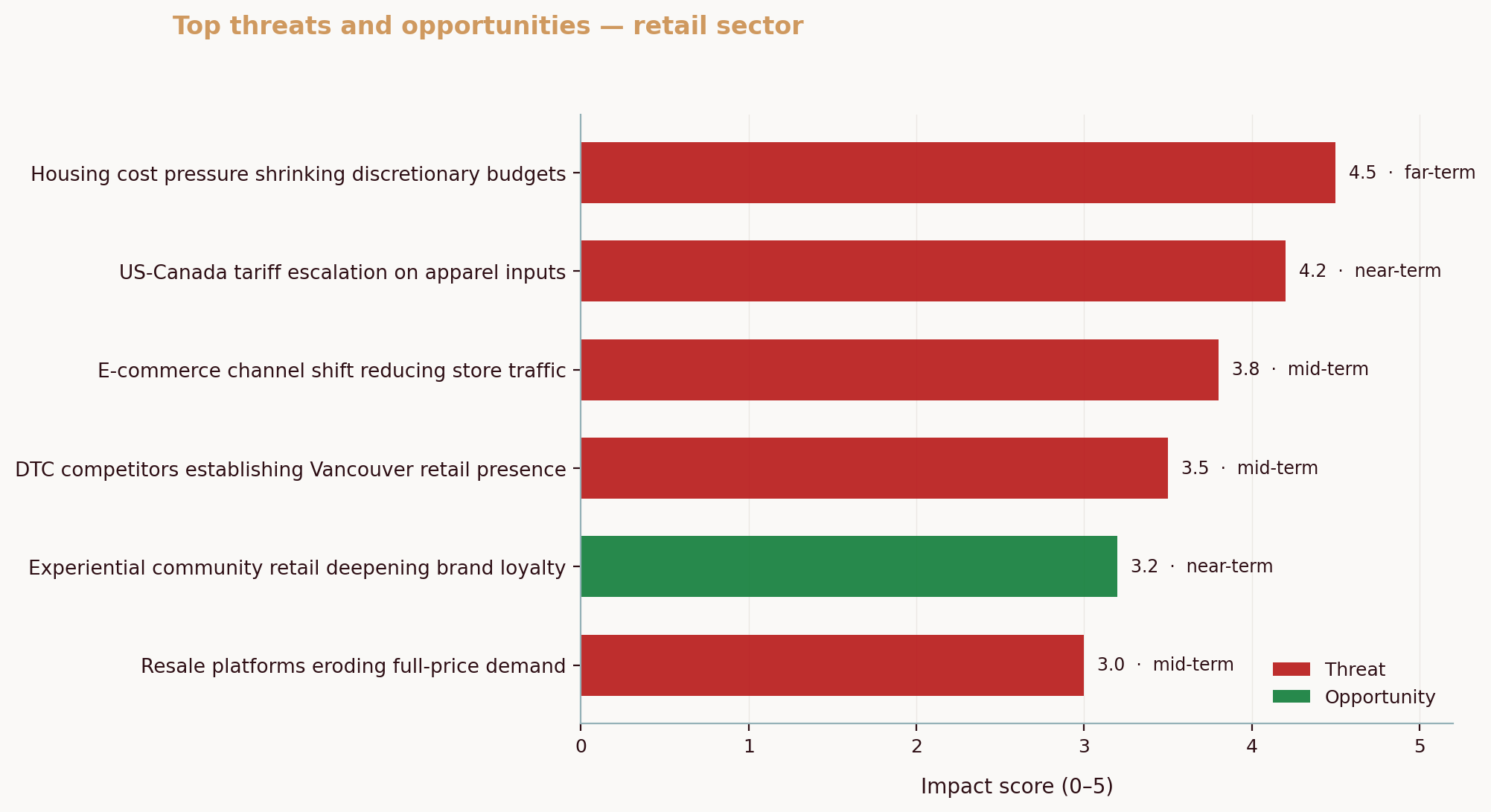
What about patterns that go beyond your shop? In Vancouver retail, mentions of a particular athleisure brand’s pricing were being squeezed on multiple fronts by global entrants and influencer-led alternatives. When that context surfaces in your reviews (“overpriced compared to X”), a graceful response can both empathize and name a differentiator you actually control, such as a hassle-free return policy or local same-day alterations. You’re not debating their price perception; you’re leading with a choice you made to deliver value.
One last edge case: legal threats. If a reviewer claims something serious (food poisoning, safety hazard), don’t speculate or diagnose publicly. Acknowledge, suggest a direct contact path, and document internally. Have a one-sentence template ready that shows concern without admitting fault. Treat these moments like an online crisis response, with clear roles and a single point of contact.
If you’re mapping edge cases across competitors, it helps to borrow the same discipline you use for market analysis. Track recurring themes by category, not just star count. Then build one tight response for each category and one internal fix to match. Our guides on finding true competitors and monitoring competitor activity can sharpen that lens.
The Counterintuitive Truth About Bad Reviews
A spotless 5.0 rating can feel suspicious. People know perfection on the internet often comes from selection, not reality. A few well-handled negative reviews make your profile look human and give buyers the missing information they crave: how you act when things go wrong. In research already cited, responding isn’t just politeness; it measurably changes future ratings and boosts the volume of feedback you receive. That extra volume builds a truer, more resilient signal for shoppers comparing you with competitors. Marketing Science study.
Here’s the twist many owners miss. The reply isn’t mainly for the upset customer. It’s for the hundred silent readers behind them, deciding whether to trust you with their money. Treat every response like a billboard facing those readers. Calm tone. Specific fix. Clear path. No drama.
If you need a quick test before you hit Post, ask: “Would this reply make a careful buyer feel safer choosing us?” If yes, publish. If no, trim it until it does.
Common Questions About Responding to Negative Reviews
Should I respond to negative reviews?
Yes. Thoughtful replies show accountability and signal to onlookers that issues are taken seriously. Studies have found that when businesses start replying, subsequent ratings rise on average and review volume increases, which strengthens decision-making for future buyers. Marketing Science research and TripAdvisor/Ipsos study.
How long should I wait to respond to a negative review?
Aim to reply within 24 hours. If you need time to investigate, post a brief acknowledgement within a day and note that you’re looking into it, then follow up with the outcome. Weekends and holidays can stretch to 48 hours, but speed helps demonstrate care.
What should I avoid saying in my response?
Skip anything defensive, dismissive, or sarcastic. Don’t argue point-by-point in public, don’t diagnose the customer (“you were confused”), and don’t recite long policy text. If the review includes incorrect facts that matter for safety or legality, correct one point briefly, then move to resolution. Remember that platform rules apply to your replies too, so never include personal information or insults. Google can remove owner responses that violate content policies, and repeated issues can restrict your profile. Keep it tight, respectful, and solution-focused. Google policy overview.
How do I handle a fake review?
Post a short public reply that you can’t verify the experience and have reported it for review, then actually report it through the platform’s tools and categories (for example, “spam/fake content” or “conflict of interest” on Google). Document patterns like multiple reviews from the same IP range, new accounts with identical wording, or reviews that reference services you don’t offer. In Canada, also set a staff policy banning undisclosed employee reviews to avoid Competition Act trouble. If removal is denied, out-context the fake by earning fresh, genuine reviews over time. Competition Bureau notice and FTC rule background (for cross-border platforms).
Can I get a bad review removed?
Only if it violates platform policies. Flag reviews that include hate speech, harassment, private information, conflicts of interest, or experiences you can show are not genuine. Google, Yelp, and the Better Business Bureau each provide reporting or dispute tools. If the review is a legitimate opinion, focus on a professional public reply and take the resolution offline.
How do I respond to an unfair review?
Acknowledge the person’s perspective, state one clarifying fact if it’s essential, and offer a next step to make things right. Don’t litigate the whole history in public. Aim your reply at onlookers: calm, specific, and generous within reason. Then treat the complaint like a micro-audit. If two or three “unfair” reviews cluster around the same theme, there’s usually a process gap to close. For a practical way to turn those themes into company changes, borrow a one-page SWOT on your service experience to pinpoint where to shore up weaknesses; here’s a template you can adapt in under an hour: competitor SWOT for small business.
Take one action today: write three 80-word templates tailored to your top three complaint themes, add them to a shared doc, and assign a single owner to post within 24 hours of any new review. Consistency wins this game.
CTA
If you want help spotting the review themes that really move buyers in your category, Aurevon’s Ecosystem Dynamics Report can show where competitors win and where customer narratives are shifting in your market. See how the insights line up with your own reviews here: Ecosystem Dynamics Report.
Mitchell Ozmun
SMB Researcher, Business Analyst - Saskatchewan Born and Raised