Why London ON Discount Retail Is Bearing Inflation in 2026
The scene is familiar. Saturday rush. Full carts. Short tempers. A cashier explains a price change while three customers shuffle out of line. That is the moment loyalty breaks. For london on discount retail, demand is still surging, but rising complaints about price, retail product quality issues, and customer service variability are pulling shoppers toward competitors who feel more dependable.
Related: I Spent 6 Months Building This E-Commerce Business — 3.7Million
Macro context: Why inflation has pushed shoppers toward discount retail in London, ON
After two years of elevated prices, the average London household is stretching every dollar and trading down more often. Bank of Canada guidance in April 2026 noted near term inflation pressure before a gradual easing, which keeps value formats squarely in the consideration set for weekly needs. Statistics Canada’s latest CPI updates underscore the persistence of broad price levels that still feel high to shoppers, even if the pace is moderating. That is the fuel behind higher visit frequency to discount stores, where baskets can be smaller but total transactions stack up. Consumer price sensitivity is the story that connects these behaviors. (bankofcanada.ca)
Zoom in on the london ontario retail market and you see the shift on the ground: more comparison trips in a single week, more mixing of channels, and more “I will buy two now and check flyers later.” Discount retail trends in Canada point to a bifurcated market in which discount and premium hold up, while the middle squeezes. Social discovery compounds it. TikTok retail trends, from “haul” videos to price challenge clips, are shaping what shoppers expect to find on a quick stop. For local owners, that means more traffic, but also more scrutiny at the shelf and till. (jll.com)
Add a policy wildcard. The 2026 CUSMA review has businesses watching import costs and rules of origin closely. Even if most consumer goods remain covered by preferred rates, review year uncertainty keeps landed cost assumptions fragile, and shoppers punish every unexplained price move. This is the CUSMA retail impact in practice, and it should stay in view as you decide what to pass through and how to explain it. (canada.ca)
If you are unsure who you are truly competing with on a given SKU, review the simple field guide in how to identify your real competitors. It will clarify which nearby stores and online sellers actually change your customers’ choices.
Evidence from Aurevon: the proprietary finding linking inflation to SMB discount demand
Aurevon Intelligence Service analysis (Canadian retail SMB, March 2026). Across 5 Canadian retail business SMBs analyzed via the Aurevon Intelligence Service, we found that even as median Google ratings were high (4.6, with a p10 to p90 range of 4.16 to 4.67), the review text itself tilted toward complaints about “price creep,” uneven product quality, and inconsistent service across locations. In practical terms, inflation has handed discount SMBs more foot traffic, while also raising the bar for clarity and consistency.
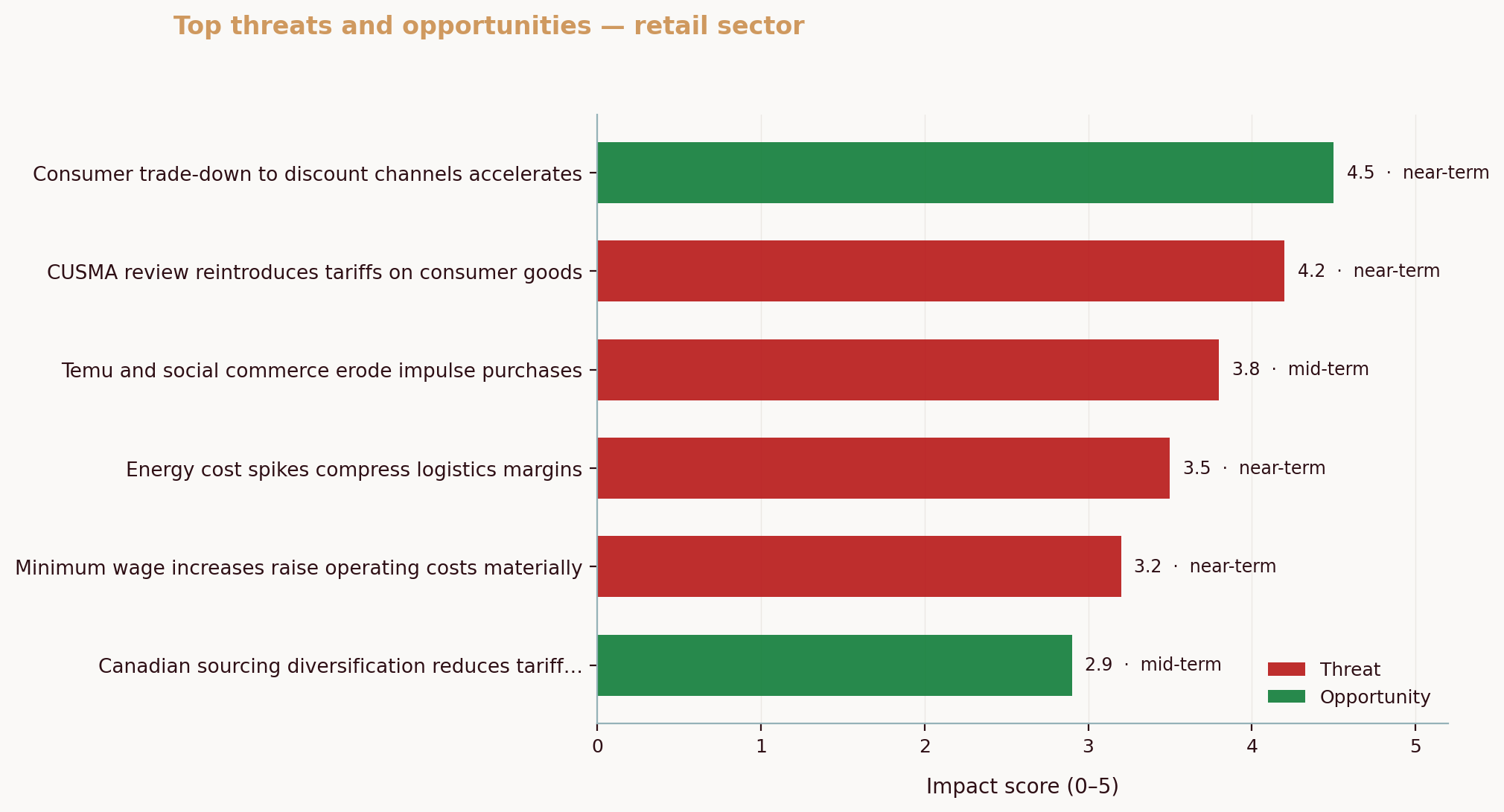
Two patterns recur in our reports. First, the Discount Channel Trade Down Advantage: value formats are capturing share as households shift baskets toward cheaper substitutes and private label. Second, Trade and Tariff Uncertainty: owners are nervous about sourcing costs and cross border volatility, which can trigger hurried price changes and, in turn, negative feedback. These findings map cleanly to London’s footfall story and the complaint spikes many operators are seeing at checkout.
What does this mean for you? Demand is real, but tolerance for friction is thin. Treat every price tag, return, and first use experience like an audition. Then back it up with a process, not heroics. For prioritization help, build a quick grid using the competitor SWOT template so your fixes land where churn risk is highest.
Rising customer complaints: price increases, product quality and uneven service
Three complaint buckets dominate.
Price transparency. Customers accept that a microfiber cloth might cost $2.25 instead of $1.50. They revolt when the shelf says one thing and the till rings another, or when “fees” inflate a promoted price. That is not just a perception risk, Canadian rules treat “drip pricing” as deceptive marketing. Fail here and you lose trust fast, sometimes with legal exposure on top. The dollar store inflation impact shows up most visibly when entry prices drift without explanation. (competition-bureau.canada.ca)
Product quality. A single dud item can undo twenty good visits. Think of a bargain brand phone cable that fails on day three. Even at $4, a refund does not erase the wasted trip and the broken plan hassle. Review clusters then form around that SKU, and the story hardens. In our tag analysis, “discount retail” co occurs frequently with “brand trust,” which is why a basic incoming quality check on top sellers pays back quickly.
Service consistency. Léger’s 2026 WOW Index shows in store experience slipping in Ontario, with longer waits and fewer helpful interactions. Turnover is the culprit in many locations, but customers do not grade stores on staffing constraints, they grade the experience they had at 5:40 p.m. on a weekday. One slow, awkward return or a missing price for three items in a row, and that shopper heads to a national chain next time. Complaints spread like a slow leak in a bucket, you do not notice the hole until the floor is wet. (retail-insider.com)
Operational mechanics matter. Supplier cost pass throughs raise prices in uneven steps. Private label or closeout stock can vary more in quality without a tight spec sheet and sampling. Thin rosters leave no slack for training. Each element compounds the others. The fix is not “be cheaper.” It is “be clearer, sturdier, and steadier.”
For low cost monitoring, set up a price watch habit using the tactics in how to track competitor pricing and marketing without expensive tools. See the difference?
💡 Pro Tip
Run a 30 day “consistency sprint.” Week 1: audit and replace missing price tags. Week 2: implement two step QC on the top 10 SKUs. Weeks 3 to 4: hold daily five minute huddles to practice scripts and log fix by tomorrow issues. Measure complaints and repeat visits weekly. Then lock in whatever moved the numbers.
Need help keeping a light but effective watch on rivals? Borrow tactics from how to track competitor pricing and marketing and slot them into your Monday routine.
Answering London retailers' top questions about discount retail under inflation
Will lowering prices always bring back customers?
Not necessarily. Big across the board cuts can train shoppers to cherry pick deals and wait for the next drop. Sustainable loyalty comes from predictable value: clear tags, fair returns, and products that do not disappoint on first use. Use targeted, time boxed promotions on known traffic drivers, and pair them with quality guarantees that say, “If it fails, we fix it fast.” That balance turns a price driven visit into a repeat habit.
How can a small store afford to improve quality without sacrificing margin?
Focus where the math works. Audit the top 10 SKUs by units, then re source one or two items where a slight spec upgrade unlocks fewer returns and better reviews. Cut low rotation clutter that soaks up handling time and generates markdowns. Negotiate bundled terms on fast movers, and consider a micro private label on a single essential where you can standardize specs. Before: staff triages three returns a day on flimsy cables. After: one better cable, one return a week, and a cleaner counter.
Is investing in staff training worth it when turnover is high?
Yes, if you keep it lean and repeatable. Use five minute daily huddles, post the three service scripts by the till, and keep a one page “how we fix complaints” at the service desk. These tools work even if half the team is new. Sprinkle in low cost retention moves, like shift swaps and public recognition. It is like giving every shift a checklist, the way airlines standardize safety. Consistency shows up at the till.
How quickly can we see results if we implement these recommendations?
You can usually see a measurable dip in complaint volume and a bump in repeat visits within 30 to 90 days if you act on price tags, QC on fast movers, and basic service scripts. Supplier renegotiations and margin effects take a bit longer, often 3 to 6 months. Reputation shifts follow performance, expect steady gains over several quarters as review themes change.
For broader market signals that validate your moves, track Bank of Canada updates on inflation expectations and industry briefs on value format resilience. Both help time promotions and plan inventory. (bankofcanada.ca)
To expand the playbook, see how to identify real competitors and the competitor SWOT guide. Use them to choose one action you will implement this week.
Aurevon’s Ecosystem Dynamics Report distills local market signals, complaint themes, and competitive moves into a simple action path for discount operators in London. If you want a data driven read on where to shore up price clarity, quality, and service next, learn more at https://aurevon.ca/.
Mitchell Ozmun
SMB Researcher, Business Analyst - Saskatchewan Born and Raised